TL;DR
When the system stops moving, parents have to take over. Discover the story of the EHCP backlog and how families are finding their own way back to learning.
The Silent House
In a quiet semi-detached house, Lizzy Miller stands by the kettle, listening to the silence from upstairs. It's 9:15 AM. The house should be empty, but Jamie is still in his room, the curtains drawn.
Lizzy looks at the stack of paperwork on the counter. She has done everything right, but the Local Authority's response is always the same: The queue is long. Please wait. For Lizzy, waiting feels like watching her son's spark go out in real-time. She isn't just a mum anymore; she's a full-time advocate, a researcher, and a shield against the council's threats of fines. She is waiting for an assessment that is months away, and she feels completely powerless.
The Private Choice
A few streets away, Clare Sterling is in the same boat, but she has a different set of oars. Two weeks ago, she and David decided to spend £3,000 on a private clinical assessment.
The specialist came to their home, and a week later, a thick, professional report arrived. When Clare handed that to the school, the tone changed instantly. The "what if" became "when." Clare felt a wave of relief, but it was shadowed by the uncomfortable guilt that Sam's progress was now moving on a completely different timeline than those left in the queue.
The Weight of the Unknown: A War of Attrition
As the months drag on, the official route for the Millers remains at a standstill. Lizzy is beginning to realise that this isn't a short-term hurdle; it's a long-term battle of willpower.
The crisis is getting worse because the modern school environment has become a pressure cooker. In the last few years, classrooms have become noisier, corridors more crowded, and the curriculum more rigid. For children like Jamie and Sam, the middle ground has disappeared. There are fewer quiet spaces and less flexibility than there were a decade ago. As schools are pushed to hit higher targets with fewer staff, the children who don't fit the standard mould are being squeezed out by the sheer intensity of the day-to-day grind. The system has become a rigid machine, moving at a speed and volume that leaves no room for a different way of being.
Taking Back Control
The breakthrough didn't come from a letter through the door. It came when Lizzy and Clare met at a local park and realised that while they were waiting for the system to save them, they could start saving themselves.
They stopped looking at the school gates and started looking at their own four walls. If the school wasn't going to provide a safe space, they would build one at home. They began a process of low-demand parenting, stripping away the pressure of the 9:00 AM start and the high stakes.
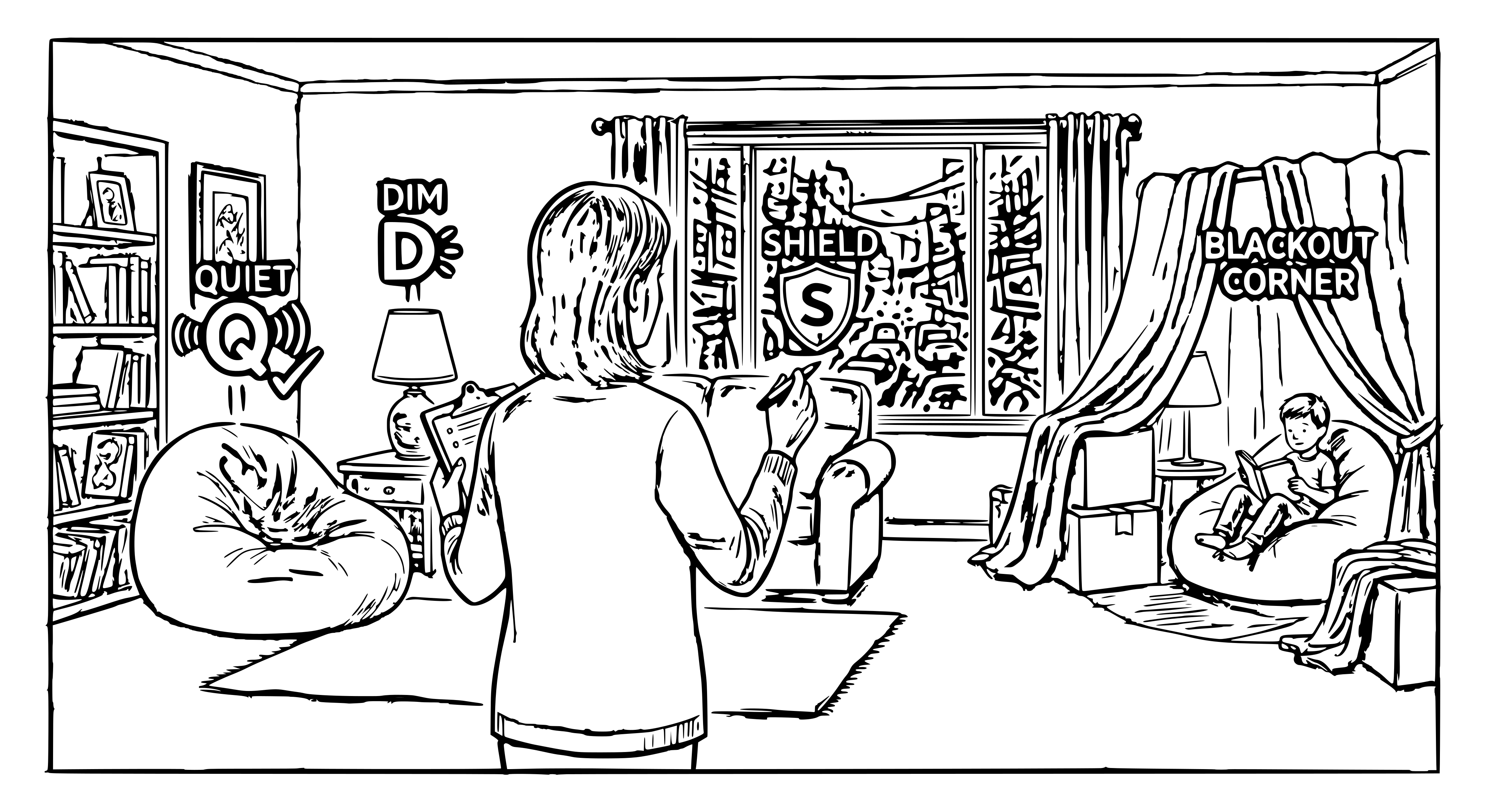
Lizzy started a sensory check of her own house. She realised that the hum of the old fridge and the scratchy labels on Jamie's clothes were keeping his nervous system in a state of constant red alert. She swapped the lightbulbs for warmer tones and created a blackout corner in the lounge with just a beanbag and some heavy blankets. These weren't expensive fixes, but they were the first things that allowed Jamie's heart rate to finally drop.
Clare, despite having her private report, realised Sam needed the same thing. Together, the two mums started "Parallel Play" afternoons. No pressure to talk, no "how was your day" questions. Just two kids in the same room, on separate beanbags, playing their own games. It was the first time in months they had seen their children look relaxed.
The Resilience of the Wait
The paperwork didn't magically appear, and the school didn't suddenly transform into a sanctuary. But something shifted. Lizzy stopped feeling like she was just shouting into the void and started feeling like an expert on her son.
Spotting the patterns was half the battle. Every time Jamie managed a ten-minute walk, or every time a certain noise caused a meltdown, she wrote it down. She began to see the "why" behind the "what." This wasn't about being a stressed mum anymore; it was about gathering the evidence of his daily life. When the Local Authority finally did call her for an initial meeting, she didn't show up with a plea; she showed up with a clear, calm record of his triggers and his triumphs. She had information they couldn't simply dismiss.
Learning on Their Own Terms
The biggest worry for Lizzy was the learning gap. She couldn't afford to quit her job to be a full-time teacher, and she didn't have the headspace to run a home school after a long shift. Instead, she leaned into interest-led discovery.
During the hours she was at work, she left Jamie with low-pressure discovery boxes or links to documentaries about the things he actually cared about like the ocean, engineering, or gaming history. It wasn't formal teaching, but it kept his brain engaged and his curiosity alive. Sam was doing the same, using online modules to pick up where she left off, but at her own pace. They were keeping the pilot light of education flickering, proving that learning hadn't stopped just because the attendance register had.
The Light at the End of the Hallway
The shift didn't happen because of a letter from the council; it happened because the school finally stopped looking at the absence and started looking at the kid. The teachers began sending home bits of news, not just homework, but jokes from the lunchroom and updates on the school's art project. For the first time, Jamie and Sam didn't feel like they were being hunted down; they felt like they were being missed.
Jamie realised he actually missed the banter in the science lab and the way it felt to finally nail a difficult maths problem. He wanted the structure back. He just needed it not to hurt. Sam, too, found herself scrolling through her friends' photos, wanting to be part of the inside jokes again instead of just watching them through a screen. The home learning had kept their brains sharp, but it also reminded them of what they were capable of. They weren't broken; they were just waiting for a version of school that wouldn't set off their internal alarms.
Now, the return isn't a looming threat. It's a project they're part of. The school has been brilliant, agreeing to a soft start where the kids can slip into a quiet room before the corridors get rowdy. They've swapped the "you must" for "how can we?" Jamie and Sam are actually packing their bags with a bit of excitement instead of dread. They aren't just being forced back into a building; they are reclaiming their right to be there, finally ready to walk through the doors as themselves.
This story is for educational and illustrative purposes only. It does not constitute professional advice.