TL;DR
The alarm goes off and the dread sets in. For Arlo, school isn't just a building—it's a sensory riot. Read how one family moved past the morning stand-off to understand the 'why' behind the absence.
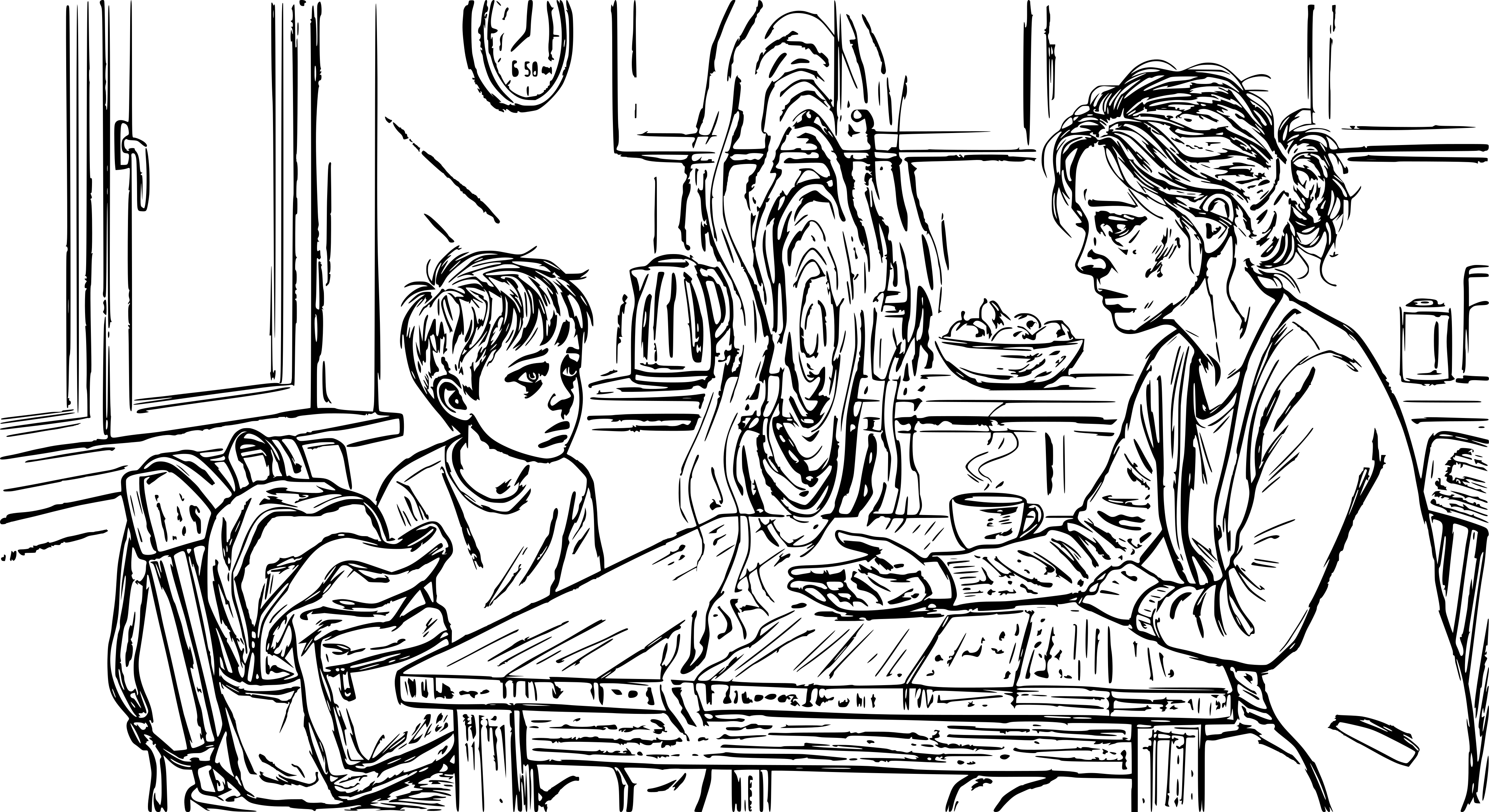
The 7:00 AM Stand-Off
The kitchen table was a battlefield. At 7:00 AM, the air in the room didn't just feel heavy; it felt thick, like Arlo was trying to breathe through a wool blanket. His school blazer was draped over the back of the chair, and just looking at the crest on the pocket made his stomach tighten into a hard, cold knot.
Arlo didn't have a name for what was happening. He didn't know why his heart would start a frantic, uneven thud against his ribs the moment he reached for his bag. He wasn't choosing to stay home; his body was reacting to a wave he couldn't yet explain. It was as if his internal alarm system was ringing at full volume, and without knowing why, he had no way to turn it off.
The Riot of the Senses
For Arlo, there was no such thing as quiet. Most students have an internal volume knob that lets them tune out the hum of the world to focus on the teacher's voice. Arlo's was jammed on full. Without a way to filter the environment, everything hit him with the same aggressive force.
The sharp, electric buzz of the fluorescent lights wasn't just a background noise; it was a physical vibration that seemed to rattle against his skull. While others saw a steady glow, Arlo felt a flickering pulse that made his eyes ache. Then there was the lesson bell—not just a signal to change rooms, but a sudden, piercing shriek that acted like a jolt of electricity to his entire system, leaving his heart racing for minutes afterward.
Even the small things were loud. The rhythmic click-clack of a pen three rows back felt like a needle tapping against glass. The heavy, sweet scent of floor polish in the corridor became a thick fog he had to push through. In the middle of a busy hallway, the movement of hundreds of bodies wasn't just a crowd; it was a crushing tide of heat, noise, and unpredictable touch.
Because no one had explained that his body was simply hearing the room more intensely than everyone else, Arlo felt like he was glitching. He didn't realise he was experiencing sensory flooding; he just felt the rising panic of a person trapped in a room where the volume was stuck on high. The exhaustion didn't come from the schoolwork. It came from the sheer, staggering effort of trying to stay still while his nervous system was screaming at him to run.
In the classroom, he'd look at the other kids and wonder how they could ignore the scrape of a pen or the heavy movement of the crowd. He felt like he was being bombarded by information every second. Because no one had explained that some people experience the world louder than others, Arlo assumed he was simply failing at being a normal teenager. The anxiety wasn't an attitude; it was the physical exhaustion of trying to mask that overwhelm.
The Invisible Wall
His mother sat across from him, her coffee long since forgotten. She looked exhausted, not because of Arlo, but because they were trying to solve a puzzle with half the pieces missing. She saw the way his face went pale at the mention of the school gates. She knew this wasn't about getting his own way; it was a total collapse of his ability to cope with the sensory friction of the day.
She was the only person who saw that the struggle wasn't a choice. She was the shield between her son and the threat of fines for a situation where his body had simply reached its limit. She wasn't against the school. She wanted him there. But she knew that until the "why" was understood, the "how" was never going to happen.
The Break in the Clouds
The change didn't start with a new policy or a change to the building. It started on a Tuesday morning when the pressure finally broke. Arlo was braced for the usual talk about "missing out" or "trying harder", but it never came. Instead, his mum just sat on the edge of the kitchen chair and asked a different kind of question.
She didn't mention his attendance percentage. She didn't point at the warning letters from the council. She just asked, "Arlo, when you're standing in that hallway, what does it actually feel like? What is your body trying to tell you?"
For the first time, things actually clicked. They stopped acting like Arlo was dodging school because he was lazy or difficult. Instead, they finally saw it for what it was: his body literally shutting down because everything around him was too much to handle. They went back to the school not to demand the walls be moved, but to ask for understanding. By identifying the specific triggers—the buzzing lights, the crowded corridors—they could finally put a name to the noise.
The Calm After the Storm
Going back was slow. There was no big "I'm back" moment. It started with an hour here and there in the art block, a place where the noise was lower and the expectations were clear.
The school didn't change, but Arlo's experience of it did. Once he realised his racing heart was just his body's way of saying the room was too loud, and not that something was wrong with him, the pressure started to lift. He was given a timeout card for when the noise became too much and a mentor who checked in on how he was feeling rather than just where he was sitting.
It's still a bit of a slog sometimes, and he still has days where he'd rather be anywhere else. But he's back in. He's got his headphones, he's got a pass to dodge the hallway crowds, and he's stopped beating himself up. He isn't a ghost in the corridor anymore; he's just a student getting on with his day.
This story is for educational and illustrative purposes only. It does not constitute professional advice.