TL;DR
Navigating the bridge to adulthood with autism: How modern technology and a focus on specialist strengths are redefining success for the next generation of neurodivergent young adults.
The Shifting Horizon
For years, Lizzy's life had been defined by a steady, protective rhythm. But as her son Jamie approached his eighteenth birthday, that rhythm began to change. The old fears that support vanishes the moment a student leaves the school system began to be replaced by a quieter realisation.
The world Jamie was stepping into wasn't the same one his ancestors had faced. It was a world that had, for the most part, learned to adapt. The library had quiet hours; workplaces offered flexible seating; and most importantly, the digital world had provided Jamie with a replacement for the parts of life that used to feel impossible. The path wasn't missing; it was just waiting for him to navigate it with the new tools in his pocket.
Outgrowing the Storm
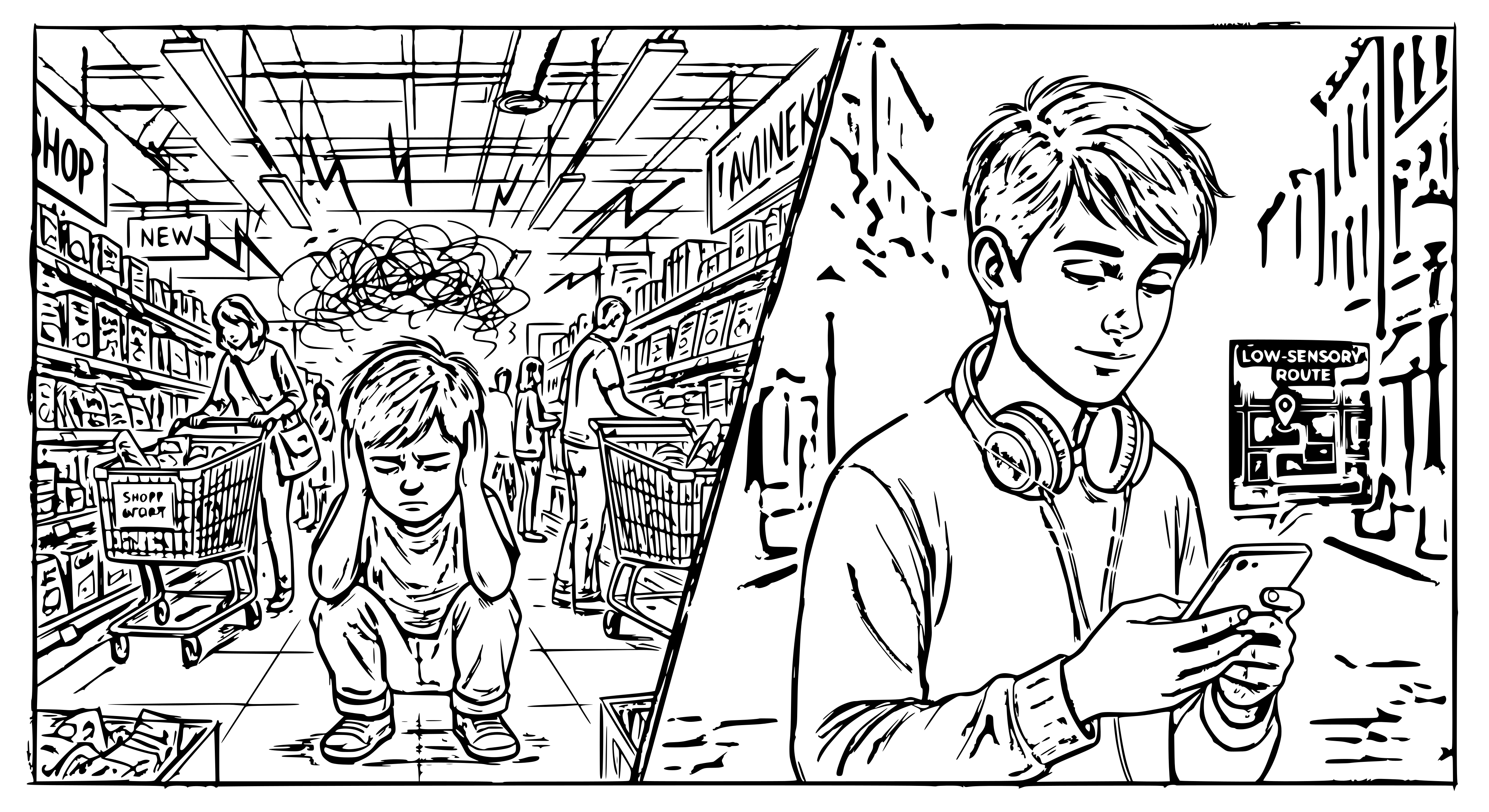
Looking at Jamie now, it was hard to remember the boy who would collapse into a 7:00 AM meltdown over the texture of a sock or the hum of a refrigerator. As his nervous system matured, some of those early, sharp edges had softened.
The explosive, non-verbal shutdowns of his early teens had evolved into something more manageable. He had outgrown the flight response that used to send him running from a crowded room. Now, at eighteen, he had the self-awareness to feel the internal noise rising and simply excuse himself before the storm hit. He had transitioned from the raw, physical vulnerability of childhood for a sophisticated set of internal signals. He wasn't cured of his autism; he had simply become an expert in managing it.
The Specialist Brain at Work
While some traits had settled, others had sharpened into genuine strengths. Jamie's neurodivergent mind—what Lizzy now called his specialist brain—had developed a remarkable capacity for deep, systemic thinking.
His childhood obsession with lining up toy cars had transformed into an adult talent for identifying patterns in complex data. Where others saw a chaotic spreadsheet, Jamie saw a story. His need for routine, once a source of friction, was now his greatest professional asset. He was the most reliable person in his volunteer group because his brain craved the rightness of a task completed perfectly and on time. He didn't just work; he optimised.
The Digital Navigator
The true game-changer, however, was the glass rectangle in Jamie's hand. In an era of digital assistance, the world had become much more accessible for a neurodivergent young adult.
Jamie's phone wasn't a distraction; it was his external hard drive for a brain that often struggled with executive function. He used noise-cancelling audio to create a portable quiet zone in the middle of a busy high street. He had a suite of apps that acted as his social interpreter: visual timers that turned the abstract concept of time into a disappearing red disc, and AI-driven assistants that helped him draft emails, stripping away the anxiety of getting the tone right.
When he felt a sensory overload coming on, he didn't have to guess where to go. He used a specialised map app that highlighted low-sensory routes and quiet spaces in the city. For Jamie, technology wasn't just a luxury; it was the bridge that allowed him to interact with the world on his own terms.
Building Interdependence
The most important lesson they learned was that independence doesn't mean doing everything alone. We all rely on tools and people. For Jamie, adulthood was about finding his own version of interdependence.
He started a supported internship. He worked with a tech firm that valued his unique perspective. He learned that wearing his headphones in the office wasn't a sign of being difficult; it was his way of ensuring he could give the job his full focus. He was learning that the world had changed, and it finally had a place for his specific way of thinking.
The Choice
The transition wasn't a sudden leap; it was a series of small, intentional choices. It started with Jamie choosing his own route to work using his transit app. It continued with him managing his own schedule with colour-coded alerts that prompted him to eat, rest, and check his messages. He was learning to use the world's new tools to build a life that felt safe and predictable, yet full of possibility.
Lizzy watched him stand by the front door one Wednesday morning. He wasn't waiting for a prompt. He had his lanyard, his smart-watch buzzing with his next reminder, and a small, confident smile. "I've got my loop-earplugs for the canteen," he told her. "And my phone is at 100%. I'll text you when I'm on the bus back."
The View from the Bridge
The fear of the future had been replaced by the reality of the present. Success didn't look like Jamie becoming "typical." It looked like Jamie becoming empowered. He was a young man who knew his triggers, utilised his digital tools, and wasn't afraid to navigate the world in his own way.
As Lizzy watched him walk down the driveway, she realised that the bridge to adulthood was something they had built together, one choice at a time. The world was ready for his specialist brain, and more importantly, Jamie was ready for the world. He wasn't just surviving; he was steering his own course into a future of his own making.
This story is for educational and illustrative purposes only. It does not constitute professional advice.