TL;DR
Is the SEND crisis a failure of the state, or a wake-up call for parents? Explore how Lizzy moved from waiting for a fragmented system to reclaiming her son's future through community and agency.
The Waiting Room of Intentions
Lizzy sat in the school's small meeting room, the familiar static of her own anxiety humming in the background. Across from her sat the Special Educational Needs Co-ordinator (SENCO) and a representative from the Local Authority (LA). They didn't look like people trying to pass the blame; they looked like people who hadn't slept in weeks.
"We've put the request in, Lizzy," the SENCO said, gesturing to a digital file. "But the system is backlogged. Every department is waiting on another department. It's out of our hands."
Lizzy looked at Jamie's empty chair. For months, she had lived by the mantra that the state would provide—that if she filled out enough forms and waited long enough, the system would eventually click into gear and save him. But as she listened to the talk of procurement cycles and panel dates, she realised the safety net had become so heavy with its own weight that it was no longer a net; it was a cage of its own making.
The Illusion of Central Control
This inefficiency is the artifact of a system that tried to be everything to everyone. The Academies Act 2010 was supposed to offer independence, but instead, it created a confusing dual accountability. The state holds the legal duty, but the Academy Trusts hold the operational keys.
The Local Authority is still the legal guardian of the child's right to education, but they no longer own the buildings or employ the teachers in an Academy. This means every request for support has to travel across a border. It's like trying to order a meal where one person has the menu, another has the kitchen, and a third holds the wallet—and none of them are in the same building.
The Wake-Up Call
Lizzy realised that Jamie was losing his connection to his peers not because people were cruel, but because she was waiting for a permission slip that might never come. She saw the "Reduced Timetables" and "Internal Exclusions" for what they really were: dead ends for a state that had run out of answers.
"I've been waiting for them to tell me what to do," Lizzy told her husband that night. "I've been acting like a passenger in Jamie's education. But the state isn't a parent. It's a machine, and the machine is jammed."
She saw "Managed Moves" and "Internal Exclusions" not as punishments, but as the system's desperate attempt to keep the gears turning while waiting for a specialist who was stuck in a three-month recruitment backlog. It wasn't a design to fail; it was a failure to design for speed.
She realised that the surge in SEND needs wasn't just a crisis. It was a revelation. It was a sign that the old factory model of state-run education was finally breaking, and it was time for parents to reclaim the driver's seat.
The First Light in the Dark: Community Over Bureaucracy
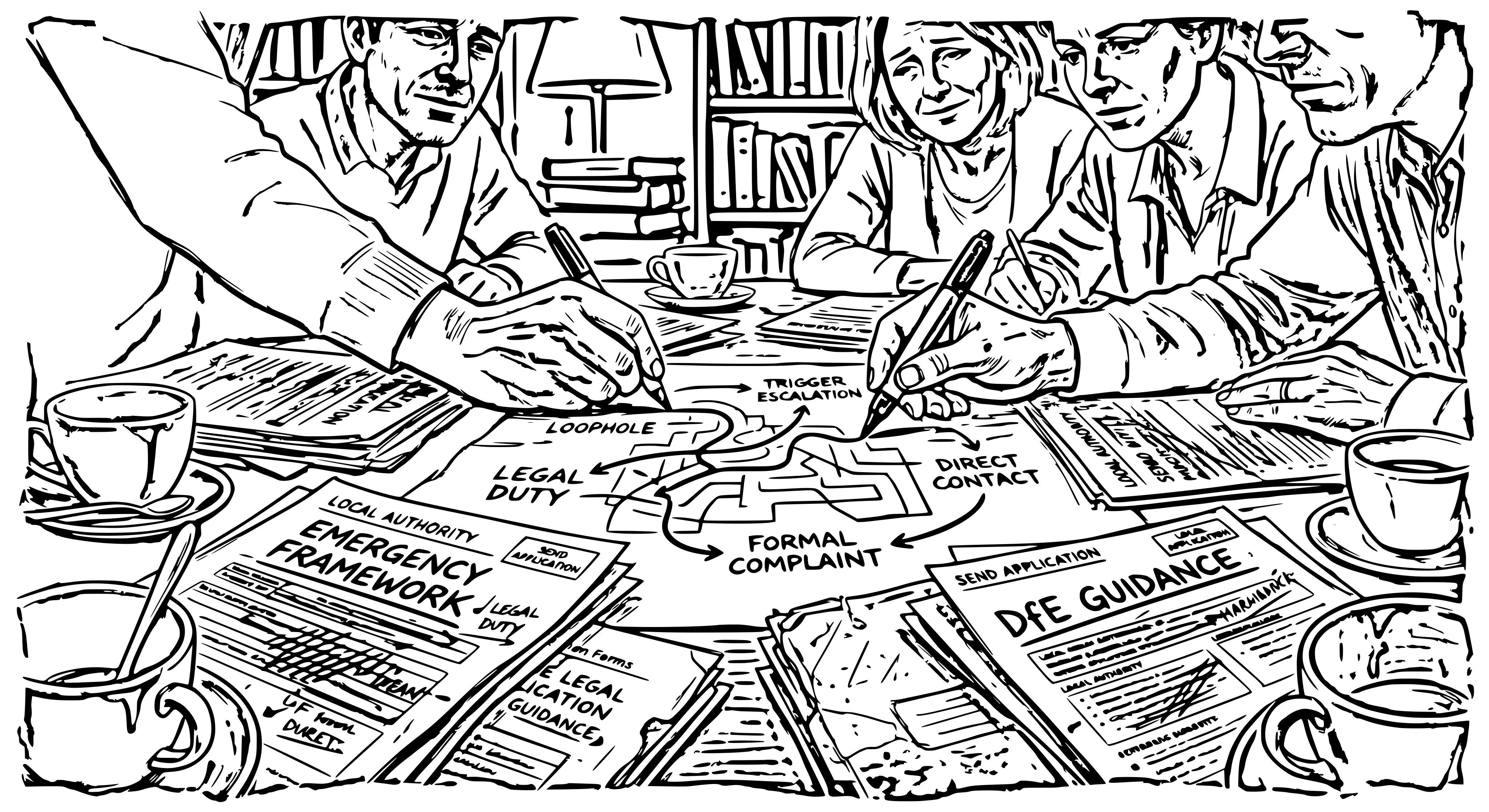
The isolation of dependency was the hardest part. One rainy Tuesday, she posted a message on a local board: “Is anyone else feeling stuck in the SEND paperwork? Coffee at the library Friday. Let's compare notes on the red tape.”
She expected to sit alone. Instead, by 10:30 AM, five parents were huddled around a table strewn with identical-looking forms.
"I waited six months for a signature that turned out to be the wrong department," one dad said, not with anger, but with the weary laughter of someone who had seen too much.
"I stopped waiting for the school to find a specialist," another said. "I found a regulated therapist myself, checked their credentials, and presented the school with a ready-to-go contract. I didn't ask if they could find someone; I told them I'd already found the solution."
Talking to the other parents turned the confusing blur of the process into a sharp, navigable map, showing her exactly where the hurdles were before she had a chance to trip over them.
Building the Bridge of Agency
As they talked, the fog began to clear. They weren't just complaining; they were building a collective manual for an inefficient system. They shared the names of the specific panel members who were helpful, the exact wording they shoud use, and the contact details for regulated specialists who knew how to work within the Trust's complicated rules.
Lizzy realised that while the policy hurdles were real, they weren't immovable. If the system was a maze of red tape, these parents were the ones carrying the scissors.
A Shared Map
The tsunami of need is real, but perhaps it is the wake-up call we needed. The state may have become too large, and our reliance on it too deep, but the power of a parent who has found their voice, and their community, is an immovable force. Lizzy looked at her Friday morning circle and realised that the solution wasn't just more money or more labels. It was the power of people sharing the map. They were the ones finally making the gears turn, one conversation at a time.
This story is for educational and illustrative purposes only. It does not constitute professional advice.