TL;DR
Tired of the crypto casino of memes and hype, Ria discovers the true power of the technology: Programmable Trust. By using a public ledger instead of a bank, she can move value and verify truth without a middleman's permission, shifting from a reactive gambler to an independent operator of her own future.
The Digital Circus
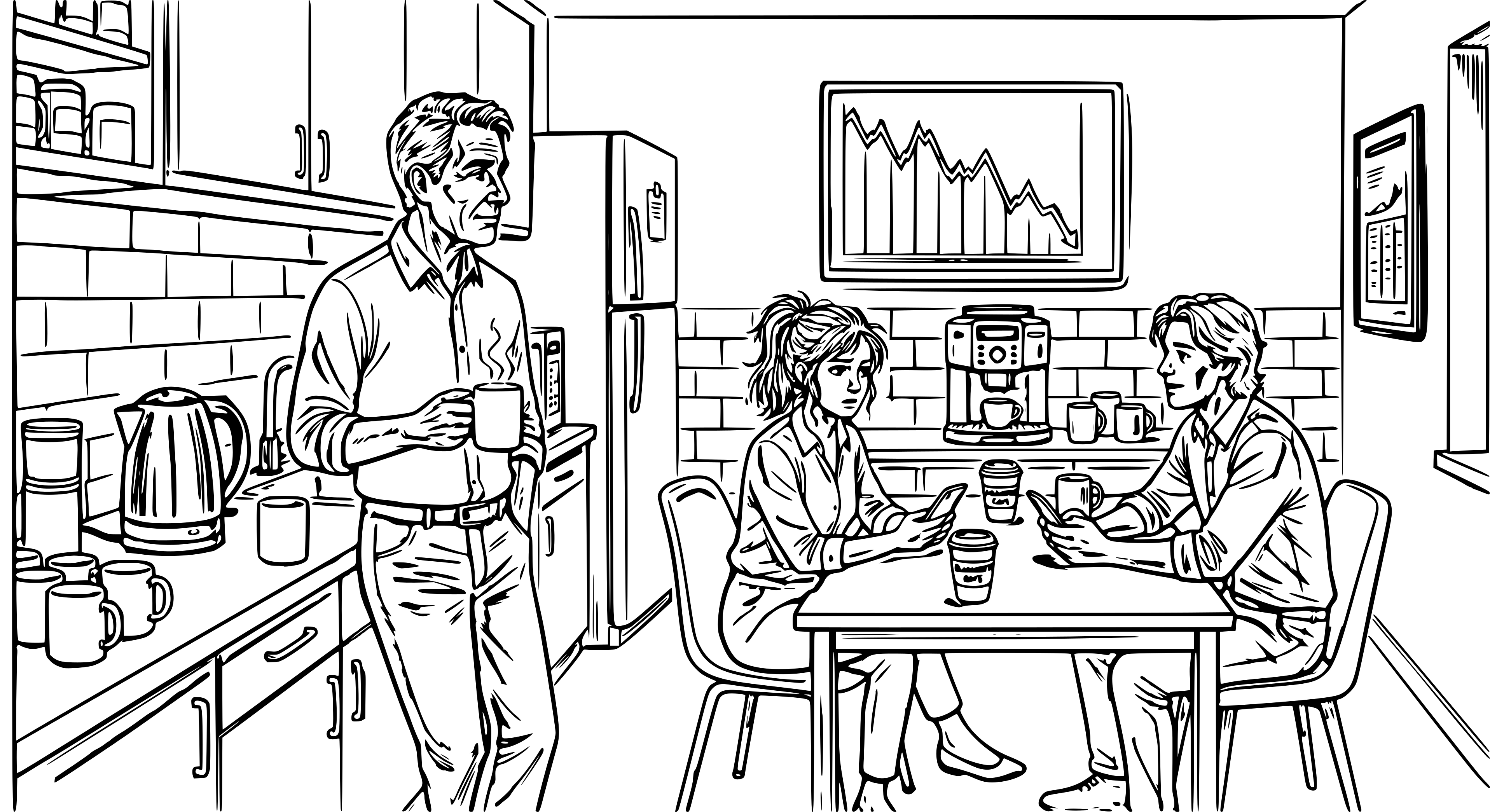
Ria sat in the office breakroom, her phone screen a chaotic blur of neon "Buy" buttons and people shouting in short, frantic videos. Her social media feed was a loud, crowded room where everyone claimed they'd found a shortcut to wealth.
"I can't do it anymore," Ria muttered, sliding her phone across the table. "I thought cryptocurrency was supposed to be a serious alternative to the banks. Instead, it's just a digital carnival. People are trading virtual tokens named after memes. It feels like a global game of musical chairs."
Across from her, her friend Toby was staring intensely at a flickering graph. "But Ria, this new coin is up 50% since lunch! If you don't get in now, you're staying behind in the old world."
"Toby," Ria said, "the old world might be slow, but at least I don't have to watch a three-minute video of a teenager in a baseball cap to understand my savings. If the revolution is just people betting on digital stickers, I'll stay behind. At least the ground is solid here."
A Bank Without a Building
"You're confusing the ticket for the train."
Martin, the office's lead developer, was waiting for the kettle to boil. "The media only talks about the coins because they're flashy. But a cryptocurrency isn't just a collectible; it's the fuel for a global, ownerless machine."
Ria looked at him, skeptical. "Explain it to me like I've never seen a spreadsheet."
"Think about your bank," Martin said. "They keep a private ledger—a list of who has what. They charge you fees to pay for buildings and staff to guard that list. Cryptocurrency is just a public ledger. It's a list of transactions that lives on thousands of computers at once. No one person owns it, and no one can change it."
"But who runs those computers?" Ria asked. "And why would they bother?"
"That's where the coins come in," Martin explained. "The people running those computers are providing the electricity and security to keep that list honest. They get paid in the network's own currency. When you send value—even if you're sending 'Digital Pounds'—you pay a tiny toll in that network's coin to the people keeping the machine alive. The coin is the incentive that makes the machine run without a boss."
Moving Value Without the Middleman
"But I can't afford a whole coin," Ria countered. "And I don't want to move all my cash out of my bank. I have rent to pay."
"You don't need a whole coin," Martin laughed. "It's not like a gold bar you can't break apart. You can buy a tiny slice—a millionth of a coin if you want. And you don't move your life savings. You just move the part you want to own completely, without a bank's permission to spend it."
"So," Ria said, her data-analyst brain clicking. "I keep my 'daily life' money in the bank for the grocery runs, but I use the machine for the big stuff? The stuff I don't want them to freeze or inflate away?"
"Exactly," Martin nodded. "You get some stability and some independence. You're unbundling the bank. Soon, we'll have insurance that pays out automatically based on weather data, or property deeds that can be traded in seconds, all because we've turned the middleman into a line of transparent code."
Moving from Spectator to Operator
Ria had been judging the entire internet by its loudest advertisements.
"So, what should I do?" Ria asked. "Ignore it all? Or start buying coins?"
"Ignore the noise, but learn the plumbing," Martin said. "Don't treat it like a lottery ticket. Get a digital wallet—it's like a private key that only you hold. If you lose it, no one can reset your password. That's the first lesson: Total Responsibility. Once you have that, you don't just hold coins. You use protocols. You lend your digital cash directly to a project you believe in, earning interest without a bank taking a cut."
Ria looked at Toby, who was now looking slightly pale as his graph took a sharp turn downward. She didn't need to be a gambler to benefit from the change.
Building a Future That Doesn't Need an Appointment
That evening, Ria didn't open her trading apps. She sat down and set up her first private wallet. She felt a strange spark of adrenaline—for the first time, she was looking at a piece of value that didn't belong to a bank. It belonged to her, guarded by maths.
She realised the wild west was just the messy start of a more grounded reality. She saw a future where she wasn't just a customer, but a participant in a system that belonged to everyone.
"Let them keep their golden tickets, Toby," Ria whispered, her fingers finding the keys with a new purpose. "I'm going to learn how to operate the machine."
This story is for educational and illustrative purposes only. It does not constitute professional advice.