TL;DR
Stop buying into the market hype on public apps where you are just the exit liquidity for early investors. Real wealth is created in the Private Market—the workshop where companies are built from the ground up. By using digital syndicates to back builders early, you move from the stadium to the boardroom.
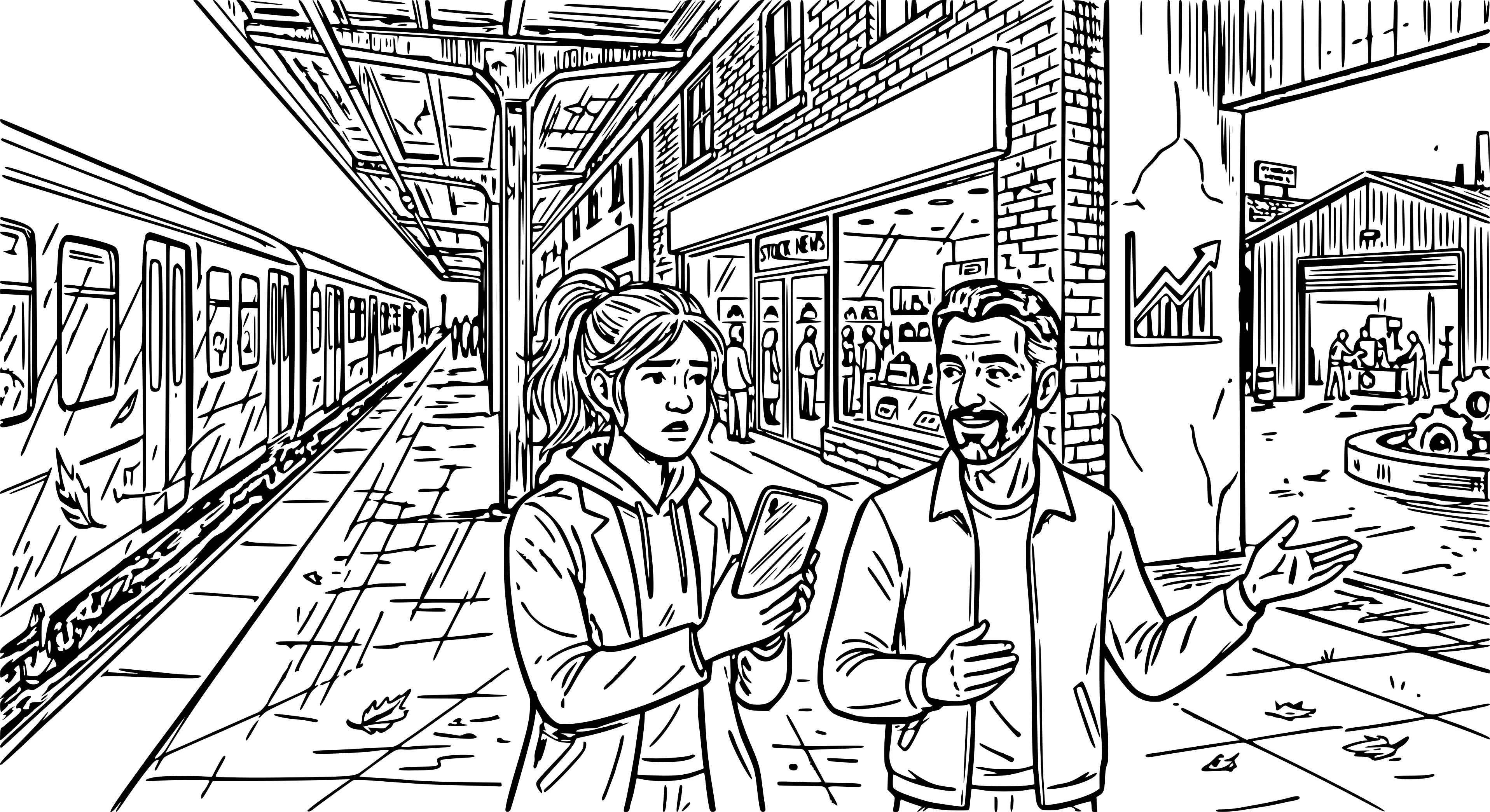
The Panic Buy Trap
Ria stood on the platform of the train station, her thumb hovering over the "Sell" button as the numbers on her screen pulsed a steady, clinical red. A cold wind swept across the tracks, rattling the metal signage above her. She'd bought into a high-profile tech firm just after its massive debut, swept up in the hype. Now, the price was cratering.
"Tough day for the growth fund?"
Ria looked up to see Arjun leaning against a steel railing. They had met a few weeks prior when his firm hired her agency to run a forensic audit on a logistics network. He was the client—a seasoned private investor who seemed more interested in data than trends.
"It's frustrating," Ria said, lowering her phone. "I feel like by the time people like me are allowed to buy in, the insiders have already extracted the real value. We're just the exit liquidity."
The Store vs The Warehouse
"That's because you're shopping at the end of the supply chain," Arjun said, gesturing to the passengers checking their phones. "You're looking at the Public Market, which is essentially a high-end retail store."
"And let me guess," Ria countered, "the real value is in the back of the shop?"
"Exactly. It's built in the Private Market—the workshop where the company is actually forged. Wealthy investors build a moat while the company is still hidden from the public eye."
"A moat? Like a castle?"
"Precisely. A 'competitive fortress,'" Arjun explained. "It might be a secret formula no one can copy, or a service that becomes more valuable simply because so many people use it—making it impossible for a newcomer to steal them away. Insiders fund that growth when the company is worth ten million. By the time the drawbridge is lowered for the public, it's worth ten billion. You aren't buying the growth; you're buying a finished, expensive product."
Hijacking the Boardroom
Ria looked at the sharp lines of his tablet. "It's easy for you to say. You've always been on that side of the fence."
Arjun laughed, shaking his head. "Not at all. I started exactly where you are, staring at red numbers on a platform just like this. Then I realised I was playing musical chairs when the music had already stopped."
"So how did you move your seat?"
"I spent my nights digging into the 'stuff'—the unglamorous infrastructure. While everyone else was betting on social media apps, I was looking at private companies that owned data centres and underwater cables. I started small, pooling money with a few others to invest in a private logistics startup. It moved me from the stadium to the boardroom."
The Buy-Low Backdoor
"So, going public is just a way for them to dump their shares on us?" Ria asked as the train rumbled in the distance.
"It's a tool to raise capital for global scale," Arjun clarified. "But for the early investors, the public debut is their payday. And during a recession? The public market panics. People sell great companies at a massive discount just to stop the pain."
"And that's when the private players step back in?"
"Every time," Arjun nodded. "They buy those companies for pennies, take them private again to restructure them away from the noise, and re-launch when the sun comes out. They use the public's fear to buy and the public's excitement to sell."
Storming the Gated Community
Ria watched the crowds boarding the train. "But the gate is still there, Arjun. I can't just walk into a private boardroom with my savings account."
"The walls are thinner than you think," Arjun replied. "Finance is becoming decentralised. There are now digital syndicates where regular investors pool capital to back startups alongside major firms. There are secondary markets where you can buy shares of private companies directly from employees who want to cash out early."
"So I should be looking for the builders, not the names on the news?"
"Precisely," Arjun said, pointing to a project on his screen—a group of engineers developing decentralised water-purification systems. "This isn't a 'trending' name, but it's a tangible engine of value. You could find a syndicate today and contribute a few hundred quid to that specific workshop. You'd own a direct slice of the machinery solving a literal crisis."
From Shopper to Scout
The conversation left Ria with a sense of quiet clarity. The market was no longer a confusing wall of numbers; it was a series of layers. She realised the most successful investors weren't those who guessed which way the wind would blow, but those who owned the windmills.
She didn't sell her shares in a panic. Instead, she tucked her phone away, no longer acting as a retail shopper. She was becoming a scout. She was ready to hunt for the workshops and the hidden engines of the economy, looking for a way to own a piece of the future before the rest of the world was invited to buy it at a markup.
This story is for educational and illustrative purposes only. It does not constitute professional advice.