TL;DR
Ria realises that while a global index fund is the best set-and-forget tool for personal growth, true wealth security requires more than just a private portfolio. Through a reunion with an old friend, she explores the gap between individual effort and systemic hoarding, concluding that a fair future requires both a smart personal strategy and a voice in how wealth is shared.
The Get-Rich-Slowly Machine
Ria sat on a weathered park bench, the autumn air crisp enough to make her glad for her thick wool coat. On her lap was a tablet, but for once, it wasn't showing flickering debt clocks. It was a simple, boring line.
After years of searching for the perfect move, Ria had found her anchor. She had set up a monthly transfer into a Global Index Fund. It wasn't flashy. It didn't promise to double her money overnight like the crypto tickers Toby followed. Instead, it was a slice of every major company on the planet.
"Five years," she whispered to herself. That was her new rule. This wasn't money for next month's rent; it was a pension she controlled. By automating a small payment every payday, she was no longer trying to outsmart the market. She was simply letting the world's collective hard work do the heavy lifting for her. It was the ultimate set-and-forget machine—diversified, simple, and steady.
The Trust Fund Fortress
"Ria? Is that actually you?"
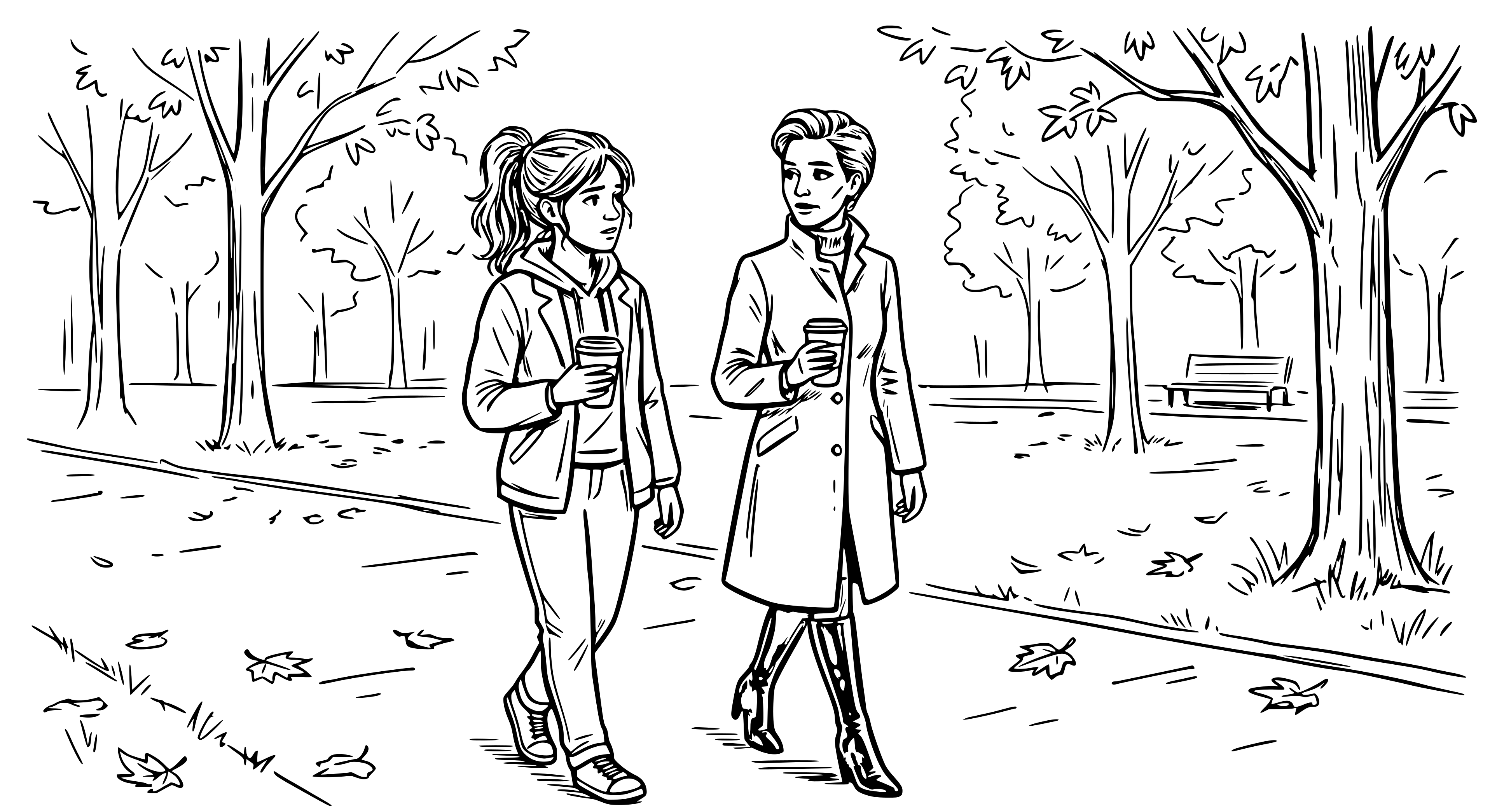
Ria looked up to see Chloe, a friend from her university days. Chloe looked different. Expensive. Her coat was tailored, and she carried the kind of effortless calm that usually only comes with a very large safety net. They grabbed coffee and caught up.
"I moved back recently," Chloe said, staring into her latte. "My grandfather passed away. He left me the family estate. It's… a lot, Ria. Several properties, a massive trust. My lawyers are thrilled. They keep talking about how 'protected' I am."
Ria smiled. "That sounds like a dream, Chloe. No more worrying about the rent going up."
"I suppose," Chloe said, shrugging. "But it's weird. I haven't actually paid any tax on it. They call it an inheritance, so it just sits in this trust. I don't feel like I've made any money because I don't get a monthly payslip from it. It's just... there. It feels a bit useless, honestly. I'm still just living my life, but now I own a fortress I didn't build."
The Hoarding Trap
Ria set her coffee down. "Wait, what actually is a trust? And why didn't you have to pay inheritance tax? My cousin just lost nearly half of his nan's flat to the government when she passed."
"A trust is basically a legal 'person' that holds the money," Chloe explained. "Because the trust owns the assets, not my grandfather personally, it didn't technically 'change hands' when he died. It stays in the fortress. Since I'm just a beneficiary who can use it, the taxman doesn't see a transfer of wealth to tax."
"So, it just sits there? Untouched and untaxed?" Ria asked.
"Exactly," Chloe said. "It's perfectly legal. It's just a way to keep the family wealth together."
"But Chloe," Ria said gently, "think about that. Most families pay a huge inheritance tax because they can't afford the lawyers to build those fortresses. But because your family is ultra-wealthy, you have a private exit. Because it's not an 'income,' you pay zero. But someone working a double shift at the hospital is paying a huge chunk of their income just to keep the roads paved. We call yours an inheritance, but it's essentially a massive pile of wealth that's been taken out of circulation."
The Magic Trick Tax
Chloe frowned. "But if I don't use it, why should I be taxed? Surely they take enough from everyone else?"
"That's just it," Ria said, sketching a rough diagram on a napkin. "When the government can't collect tax from the biggest piles of wealth, they still have to pay their bills. So they use Stealth Taxes. One is the Inflation Tax—they print more money, which dilutes your pound and makes my groceries more expensive. Another is Fiscal Drag."
"Fiscal Drag?" Chloe asked.
"The government freezes tax thresholds," Ria explained. "As prices go up, your boss gives you a small raise just so you can survive. But because the tax brackets haven't moved, that raise pushes you into a higher tax percentage. You aren't richer, but the government takes more anyway. They didn't have to raise the tax rate; they just let inflation drag you into their net."
A Seat at the Big Table
Chloe looked at her hands. "I never thought of it as hoarding. I just thought it was... the rules."
"The rules were written by people with fortresses," Ria said. "I've spent the last few years learning how to build my own floor. Everyone should have an index fund and a monthly plan—that's how you stop being a victim. But even if I win my personal game, the world stays broken if the ceiling is invisible. A wealth tax isn't a punishment; it's a way to stop the inflation tax that hurts everyone else. A nurse's income is taxed more than a billionaire's stagnant estate."
Building a Future Worth Living In
The two women sat in silence. The contrast was stark: Ria, building her foundation brick by brick, and Chloe, the accidental custodian of a frozen fortune.
"I've been so focused on protecting what I have," Chloe said quietly. "I didn't realise that by hiding it, I was forcing the bill on you. If my grandfather's legacy is just a tax haven, what's the point? I want to help change the conversation. Maybe we can fund the campaigners who are pushing for a fair ceiling."
"Exactly. We can be proactive about our own pockets and still be loud about the rules of the game."
As they stood to leave, Ria looked at her tablet. Her index fund was a steady line of growth. It was her shield. But her conversation was a sword. Wealth wasn't just about the numbers; it was about the freedom to decide what was fair—and the courage to demand a system that works for the many, not just the fortresses.
This story is for educational and illustrative purposes only. It does not constitute professional advice.