TL;DR
While the news celebrates inflation hitting target levels, the reality on the ground is vastly different. This story explores the Inflation Illusion—the gap between official tech-driven data and the soaring costs of essentials like food, rent, and energy that keep the working class trapped in a different economic reality.
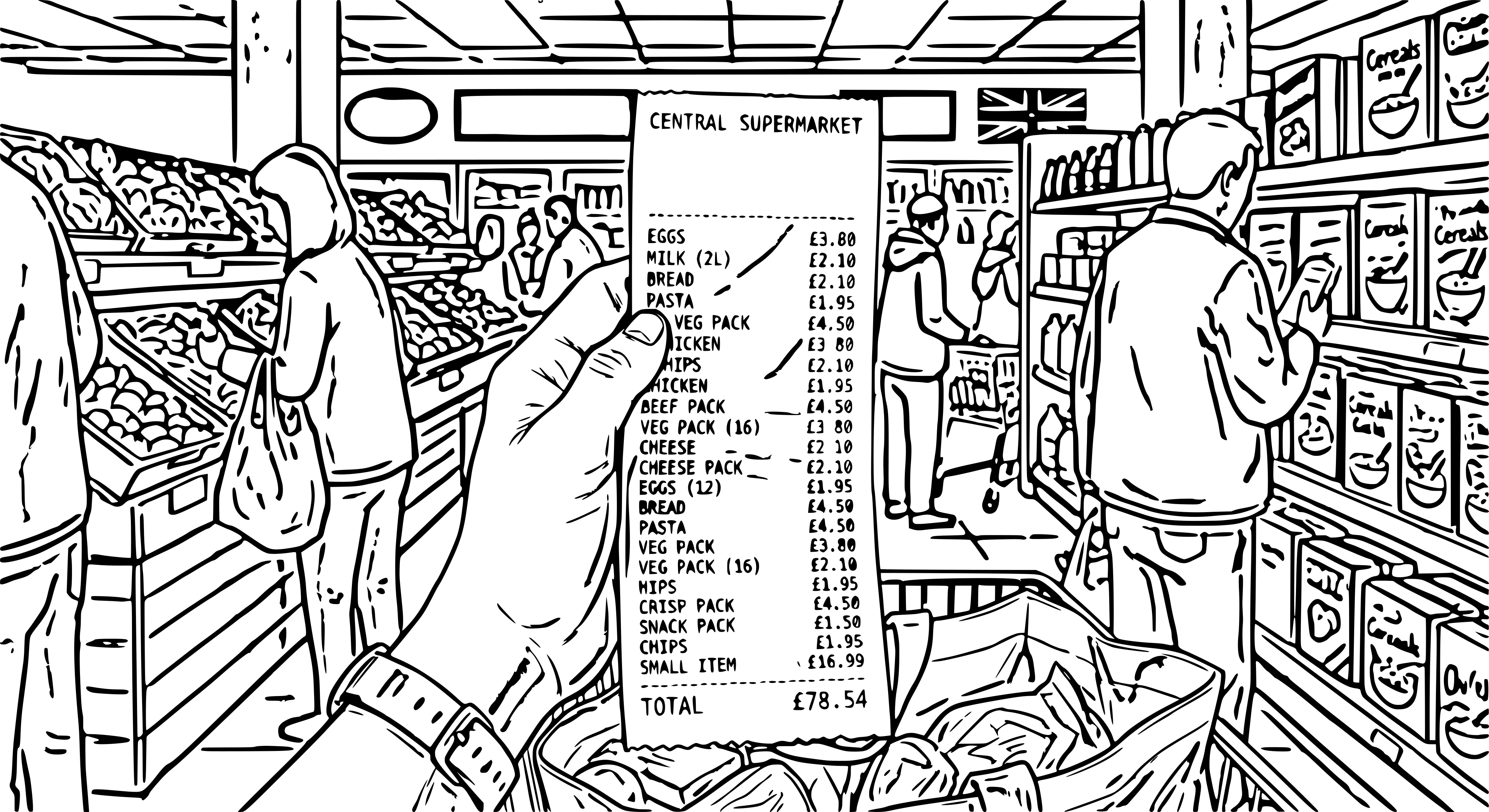
The Grocery Aisle Truth
Theo stood in the cereal aisle of a supermarket on the outskirts of London, glaring at a box of porridge oats. The price tag had climbed again—something that seemed to happen every time he turned his back. Just that morning, a news reader on the radio had announced with festive cheer that headline inflation was 'back under control' on track to hit the 2% target by the spring.
"Two percent," Theo muttered, dropping the oats into his basket. "If this is two percent, I'm the King of England."
Theo was experiencing the Inflation Illusion firsthand. While the Office for National Statistics (ONS) monitored a mythical 'representative basket' containing everything from wireless headphones to smartwatches, his own basket consisted of bread, eggs, and electricity—and those numbers were behaving like runaway trains.
The Headline vs. The Reality
For the average household, the official headline figure was complete fantasy. While high-end consumer electronics dropped in price thanks to rapid tech deflation, basic survival costs moved stubbornly in the opposite direction. Theo's personal expenditure was being hammered by three realities the 2% metric chose to ignore:
-
The Everyday Costs: A quick haircut or a Friday night takeaway still cost far more than they used to, refusing to budge even when the news said things were 'calming down.' It felt as though prices had developed a memory; they remembered how to go up, but they'd forgotten how to come back down.
-
The Energy Hangover: Keeping his flat above freezing still felt like funding a small space programme. Minor seasonal adjustments to energy caps were like putting a tiny plaster on an amputated limb; his monthly direct debit remained double what it was a few years ago.
-
The Rent Treadmill: Then there was the rent. While Theo was trying to save a deposit for his own place, his landlord had just nudged his monthly payment up by another 5%. It was a classic trap: the very thing he was trying to escape was getting more expensive, making the exit door feel further away every single month.
Even a modest pay rise from his IT firm ended up being a trick. Because the government had frozen income tax thresholds, his extra earnings pushed him straight into a higher tax bracket. By the time HMRC took its bite and the supermarket took the rest, he was earning more on paper while effectively taking home less. It was the hamster wheel of fiscal drag in full motion.
A Tale of Two Baskets
At the checkout, Theo thought of Maya, a former colleague now working in consulting. Maya lived in a refurbished city centre flat. To Maya, inflation was just a word she heard on podcasts.
Her life was insulated by salary-sacrifice perks. She drove a brand-new electric vehicle taxed at a fraction of his petrol car, and her company paid for her high-speed home broadband. She was living in the official 2% reality the news kept talking about because tech efficiencies shielded her from raw operational costs.
Theo, meanwhile, was trapped in the ground-floor reality. With nearly half his net income eaten by rent and basic groceries, his personal inflation rate wasn't 2%—it was closer to 8%. The economy had quietly split into two lanes: one where technology made life cheaper, and another where the basic cost of existing grew more expensive by the week.
The Turning Point
Realising official economic forecasts weren't written for people paying off their own electricity meters, Theo stopped listening to them entirely. He began calculating his own numbers based strictly on non-negotiables: rent, food, and energy.
If the macro-economy was a fix, he would build a micro-economy that actually worked:
-
The Rate Lock: He spent forty minutes on hold to his energy provider to lock in a fixed tariff before the autumn rate adjustments hit.
-
The Bulk Loop: He teamed up with his neighbour, Sarah, to bypass the 'convenience trap' of the local shop. Together, they bought staples like grains and dry goods in bulk, cutting out the steep markups on the processed foods that were spiking in price.
-
The Skill Swap: When Sarah's washing machine choked on a trapped coin and failed to drain, Theo brought over his toolkit instead of letting her call out an engineer. An hour of greasy work saved her a £150 call-out fee—a debt she repaid not with cash, but with three days' worth of batch-cooked meals.
The New Currency
That evening, Theo sat at his kitchen table with a bowl of Sarah's slow-cooked beef stew. It was a completely tax-free, inflation-proof transaction.
He glanced at his smart meter on the counter. The LED glow remained a stubborn amber, a reminder that energy companies were still quietly draining his account by the kilowatt. But as he took a spoonful of the warm, peppered broth, the weight of the latest price hikes felt a little less heavy. This bowl of stew was tangible, warm, and entirely inflation-proof.
The city was still split. Maya had her subscriptions and her electric car, and that was one way to survive the squeeze. But Theo had something else: a network of neighbours and a clear view of his own costs. He wasn't just a data point in a financial cycle anymore; he was part of a quiet recalibration.
The news could keep celebrating its 2% target all it wanted. On his own street, Theo was finally counting the only numbers that actually mattered. He reached over and turned the radiator valve up half a notch; he'd just saved a neighbour a hundred-odd quid, he could afford a warm room for the evening.
The scales were still uneven, but Theo knew exactly how to tip them back.
This story is for educational and illustrative purposes only. It does not constitute professional advice.