TL;DR
At thirty-four, Theo is finally transitioning from tenant to owner, but his path is blocked by a systemic freeze. While older homeowners remain trapped in oversized houses they cannot afford to leave, the next generation faces a broken handover where the rising cost of staying put might force a move towards ownership.
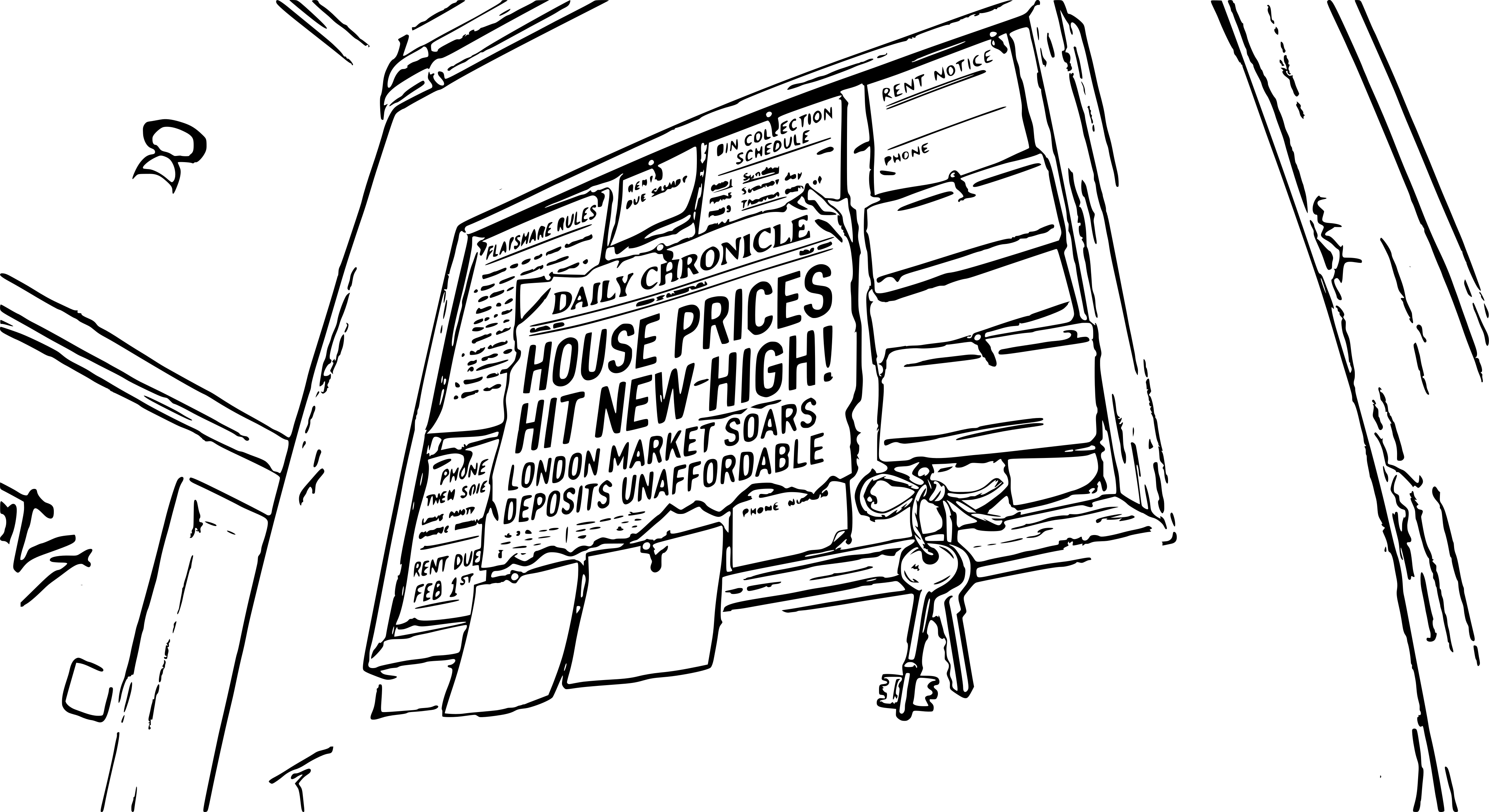
The Ownership Standoff
Theo stood on a damp pavement in a suburban commuter town, watching an estate agent prod vaguely at a patch of rising damp with the cap of his pen. The word 'mortgage' kept ringing in his head—a grim term derived from the Old French for 'dead pledge'. Originally, it meant the deal died when the debt was paid off, or the borrower died trying. Modern conveyancing felt uncomfortably close to the second outcome.
For the whole of Theo's twenties, the property ladder had felt less like an achievable financial milestone and more like a mythical creature talked about in hushed tones over lukewarm pub pints.
A Decade Behind the Curve
At thirty-four, Theo was finally hovering on the brink of buying his first place. By his father's timeline—a man who had secured a three-bedroom semi in 1988 on a single salary while working an office job—Theo was precisely a decade late. By modern UK standards, he was practically a child prodigy. He belonged to a generation expected to celebrate reaching their mid-thirties just for the privilege of handing over their life savings to an institutional lender.
As the estate agent droned on about local transport links, Theo wasn't pondering national economics. He was staring at a set of floorboards that didn't belong to a landlord who would charge him fifty quid for scuffing the skirtings.
The Vanishing Entry Point
The mechanism that once moved ordinary people out of damp flatshares and into stable housing had rusted solid. Looking down the Victorian terrace, Theo wasn't viewing a thriving neighbourhood; he was looking at an economic blockage.
The bottom rungs of the property ladder hadn't just been raised—they had been unbolted, melted down, and sold back to his generation as a high-yield buy-to-let portfolio.
The Downsizing Deadlock
The street was full of quiet contradictions. Half the family-sized homes were occupied by single retirees rattling around in four empty bedrooms. They weren't being deliberately obstructive; they were caught in the Great British Downsizing Deadlock. Between Stamp Duty, legal fees, and the sheer shortage of decent smaller bungalows, moving out made zero financial sense for them.
So everything sat frozen. The large houses remained blocked, the mid-tier properties never opened up, and the entry-level flats were permanently hoarded by offshore funds and professional landlords charging sixteen hundred a month for a box room with a kitchenette.
The Mortgage Pivot
Yet despite the deadlock, Theo felt a flicker of something he hadn't allowed himself to feel in years: cautious optimism.
He had spent a long time treating all debt as poison, having watched friends drown under high-interest store cards and predatory overdrafts. But he was finally grasping the distinction between toxic consumer credit and structured leverage. Even with mortgage rates creeping back up, the underlying maths was quietly shifting. A higher interest rate on a fixed mortgage was undoubtedly painful, but paying off a landlord’s fourth holiday home at a 10% annual rent markup was outright madness.
"You aren't just buying bricks," his broker had remarked over a spreadsheet. "You're capping your housing costs in a currency that loses value every decade."
A mortgage was a terrifying weight, but inflation would slowly eat away at the real burden of the debt over thirty years, while his rent would have guaranteed a one-way trip upwards until retirement.
A Failed Generational Exchange
Margaret next door was living proof of the structural freeze. She spent her weekends dusting three unused bedrooms and muttering about the stairs, desperate to move closer to her grandkids in Norfolk. But after calculating the friction costs of estate agents, solicitors, and tax, staying put in a drafty four-bedroom house was cheaper than moving into a modern two-bedroom flat.
It was nearly impossible for one generation to move on so the next one could move in. The 'handover' was broken, leaving everyone—on both sides of the fence—waiting for a change that hadn't come yet.
From Data Point to Homeowner
Theo looked back at the Victorian terrace. The window frames were rotting, the kitchen looked like a set from a 1994 sitcom, and the boiler sounded like a diesel engine warming up. It wasn't a grand architectural statement, but with rising interest rates spooking the market and scaring off institutional buyers, he finally had an angle. As a chain-free buyer with a hard-earned deposit, he was no longer at the mercy of a bidding war—he was the only serious offer on the table.
He had spent five years chipping away at his goal, using a Help to Save account, systematically stripping out micro-expenses until he had pieced together a deposit. It was an unglamorous slog, but it was enough to buy his way out from Generation Rent—no more annual tenancy renewals, no more surprise inspection emails, and no more asking permission to drill a wall plug into a brick.
He took the pen from the agent and signed the preliminary paperwork on the bonnet of his peeling hatchback, held together mainly by gaffer tape and sheer willpower. He was thirty-four, his back hurt from lifting boxes, and he was officially taking on thirty years of liability. But as he looked at the key fob in his hand, he knew he wasn't paying for a dead pledge. He was buying his freedom.
This story is for educational and illustrative purposes only. It does not constitute professional advice.