TL;DR
Explore the hidden cost of autistic masking in the workplace. Burnout to Belonging follows Maya's journey from Ice Queen to high-performer as she trades the open-plan office struggle for neuro-inclusive boundaries and deep work. A powerful look at sensory processing and workplace accommodations.
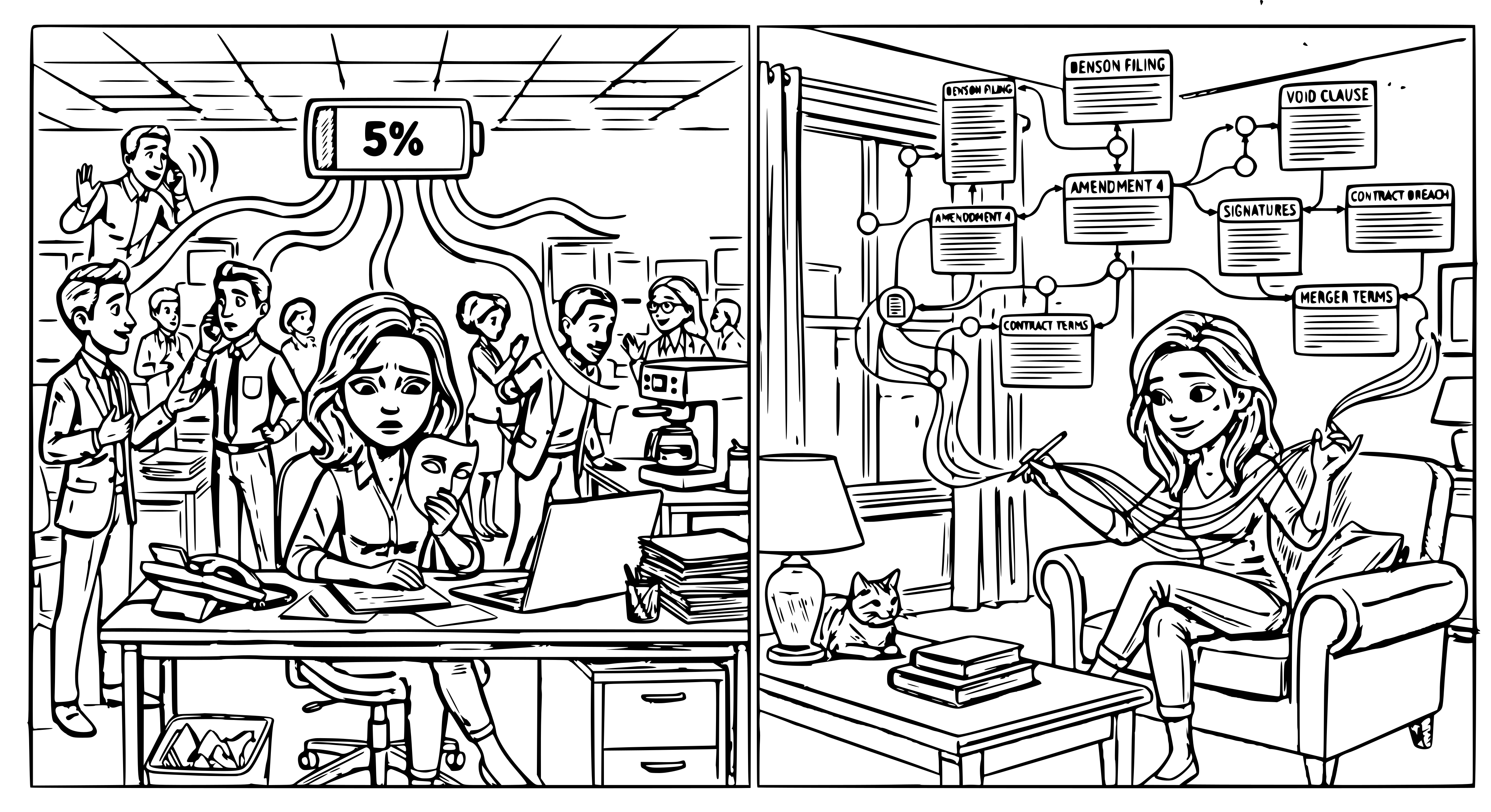
The Lift Mirror Performance
The firm's headquarters was a masterclass in modern prestige: floor-to-ceiling glass, an open floor plan designed for collaboration, and a coffee machine that hissed like a cornered snake every forty-five seconds.
Maya sat at Desk 42, her back to the rest of the room. To her colleagues, she was the "Ice Queen"—chilly, efficient, and never seen at the Friday pub drinks. In reality, Maya was a high-performance engine running on a dying battery.
She spent her mornings practising "normal" facial expressions in the lift mirror: Smile, but not too much. Blink. Tilt head when someone mentions their weekend. This performance cost her everything, and it was currently draining 80% of Maya's cognitive energy before she even opened a spreadsheet.
The Static in the Air
Around 2:00 PM, the room was thick with human static. Across the room, two junior associates were debating a case in hushed tones that felt like sandpaper on Maya's eardrums. The hum of the air conditioning seemed to grow louder, a low-frequency vibration that made her skin itch.
A senior partner, Marcus, leaned over her desk. "Maya, did you get my note about that filing? Just give me the highlights. What are we looking at?"
Maya looked up. Her brain felt like a browser with fifty tabs open, all of them frozen. She knew the filing perfectly; she could see the three missing signatures and the mismatched dates in her mind like glowing red dots. But the pressure of being put on the spot while the coffee machine hissed and Marcus stood too close was too much.
"I... I'll email you," she managed, her voice flat.
Marcus frowned. "It's a thirty-second conversation, Maya. No need to be precious about it."
The Pattern Seeker
That evening, Maya sat in her darkened flat, the silence finally allowing the static in her head to clear. She opened her laptop. Without the fluorescent lights or the smell of Marcus' cologne, the world made sense again.
Maya hadn't told anyone at the firm that she was Autistic. To her, the law wasn't about who could argue the loudest or play the best social game; it was a vast, beautiful puzzle of interlocking rules. While her colleagues spent their lunch hours networking just to get the gist of a case, Maya could sit with a four-hundred-page contract and immediately spot the one sentence on page twelve that didn't belong.
She realised her strength wasn't just a good memory; it was the way her mind mapped out these complex connections. But the office had been built for people who thrived on constant chatter and picking up on social cues. For someone like Maya, who processed the world through logic and quiet focus, the open-plan layout felt less like a workspace and more like a constant assault on her senses.
The Quiet Conversation
The burnout didn't end with a holiday; it ended with a conversation. Maya realised that the masking was an excuse to stay safe, but it was also the reason she was failing. She requested a meeting with HR, not to ask for less work, but to ask for a different way to do it.
"I process information visually and in writing," she explained, her heart hammering against her ribs. "When I'm interrupted for a 'quick chat,' it takes me twenty minutes to get my focus back. I'm proposing that my mornings are kept quiet, and that instructions are sent to me via message rather than out loud."
She also bought a pair of high-end noise-cancelling headphones—not for music, but to create a bubble of silence.
The New Normal
The first week was awkward. Colleagues walked up to her desk, saw the headphones and the small sign that read Deep Work in Progress, and retreated.
But by the second week, something happened. Because Maya was no longer spending all her energy trying to look approachable, her work became better than ever. She caught a multi-million-pound error in a merger that three senior partners had missed.
Marcus stopped by her desk—he waited for her to finish her task and look up first.
"The written report you sent was the most thorough analysis I've seen in a decade," he said. He didn't ask for anything. He just nodded and walked away.
Maya realised that the office didn't need her to be another charismatic lawyer. They had plenty of those. They needed the person who could see the patterns in the static. She had stopped trying to be the person they expected and, in doing so, became the person they actually needed.
As she left the office that Friday, the coffee machine hissed one last time. Maya didn't flinch. She just adjusted her headphones and walked out, her battery—for the first time in years—still firmly in the green.
This story is for educational and illustrative purposes only. It does not constitute professional advice.