TL;DR
Stop being mugged off by healthy low-fat hype. Most modern oils are just axle grease that gunk up your system. By swapping this fairy dust for proper fats, you'll flush the internal sludge, unjam your cellular doors, and finally build a body that's solid from the inside out.
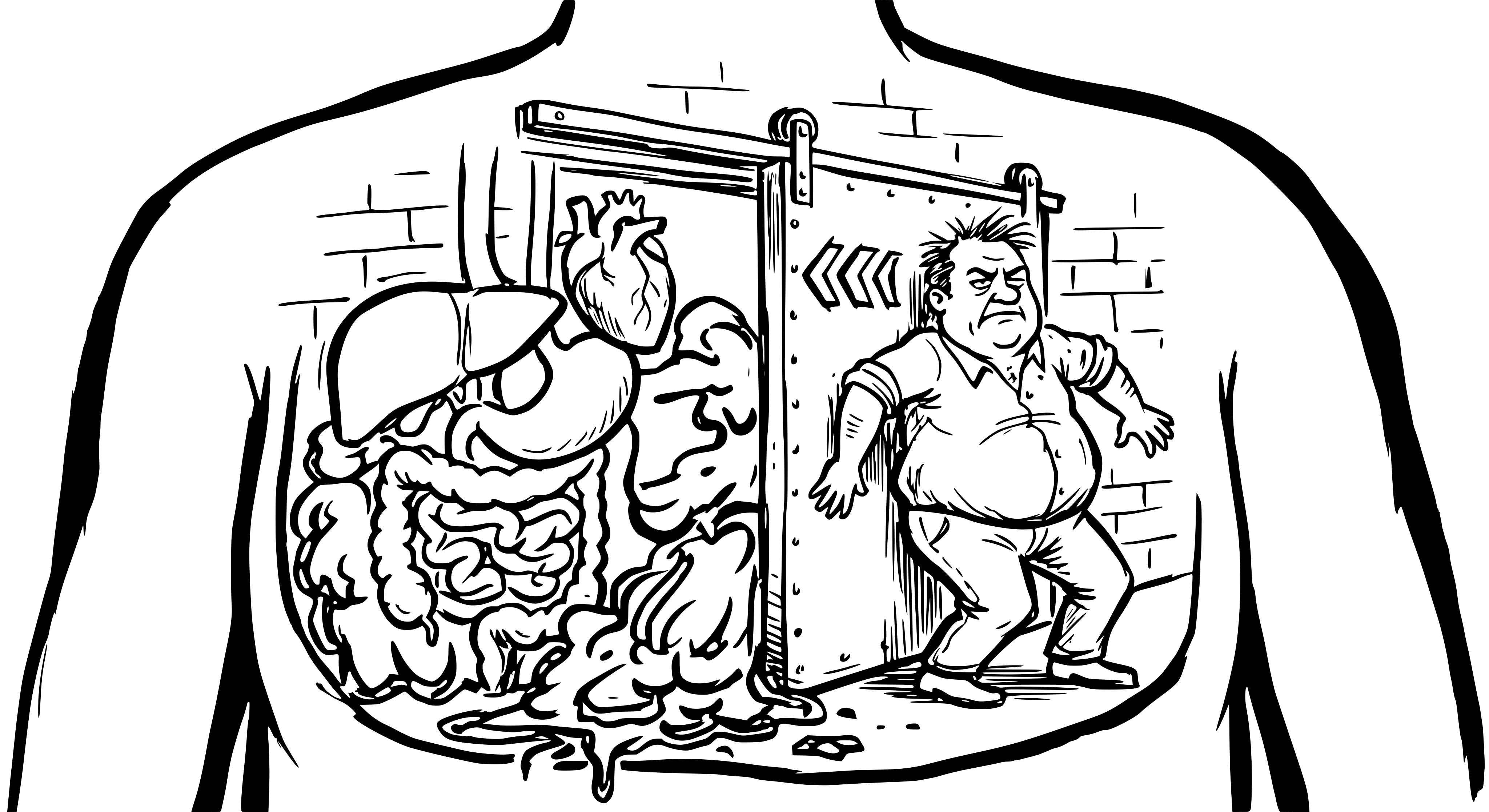
The Human Dessert
Dr Lipid sat in the clinical chill of the imaging suite, staring at a cross-section of his own torso. On the outside, he was a marathon runner with calves like knotted mahogany. But inside?
"I'm a human dessert," Dr Lipid whispered, horrified.
His heart looked like a Christmas ham, encased in a thick, yellowish, gelatinous coat of visceral fat—a greasy sleeve squeezing his organs like a slow-motion boa constrictor. His liver was shot through with white, oily streaks, resembling a slab of overpriced Wagyu beef left out in the sun. He was an elite athlete with the internal plumbing of a man who lived exclusively on carnival food.
The Office Gazelles
Determined to stop his organs from becoming a marbled delicacy, Dr Lipid launched The Pipe-Cleaner Experiment. He recruited fifty "Office Gazelles"—professionals who looked fantastic in a tailored suit but whose insides were currently a swamp of fatty waste. He promised that if they survived six months of his oil challenge, they'd stop feeling like a human slow-cooker and start feeling like a high-speed blender.
He split them into two groups. Group A, the "Rusty Hinges," stuck to their usual routines of modern, "healthy" low-fat concoctions: supermarket salads with fat-free dressing, diet meal-prep pots, and skimmed-milk coffees. They believed the industry hype, unaware they were being mugged off with budget-bin oil. Group B, the "Slick Squad", followed a regime of extra virgin olive oil, walnuts, and mackerel.
The Origin of the Oil
Dr Lipid stood before a whiteboard, his tie loosened and his eyes darting with frantic energy. "We weren't moved onto seed oils because of a health epiphany," he barked at the Slick Squad. "We were moved because of a massive industrial surplus."
He paced the room, explaining that before the 1900s, oils like cottonseed were a literal byproduct of the textile industry. To get the oil out of a biological vault designed to protect the plant's DNA, you couldn't just squeeze a seed. You had to assault it.
The Hexane Standard
"To crack those vaults, you need a solvent," Dr Lipid whispered, circling the word Hexane until the marker squeaked. "Specifically, a chemical derived from crude oil. Hexane is the industry's magic wand—a petroleum-based solvent that strips nearly 100% of the oil. It is highly profitable."
He described the violent cycle of crushing, chemical bathing, and high-heat deodorising used to remove grey, foul-smelling impurities. "It's so processed that it stays 'fresh' on a shelf for years because even bacteria aren't interested in eating it."
The Great Saturated Scapegoat
Why did the world buy in? Dr Lipid pointed to the mid-20th century, a time of feverish saturated fat skepticism. The industry capitalised on flawed studies that pinned heart disease on animal fats like butter—fats the human body has recognised and dismantled with ease for millennia. Unlike the stubborn seed, animal fats are biologically "open" and effortless to digest.
But animal fats were expensive and inconvenient. Seed oils, backed by government-subsidised crops like corn and soy, were a manufacturer's dream. They were flavour-neutral, shelf-stable, and, most importantly, cheap.
The Rigged Comparison
Molly raised a hand, clutching a bottle of "Light Vegetable Oil" she'd brought from home. "But the labels say it's heart-healthy and cholesterol-free! Dr Lipid, surely the studies aren't all wrong?"
"It's a rigged game, Molly," Arjun countered, leaning back and checking his tablet. The spreadsheet-obsessed project manager explained, "I looked into the funding. If you want to make a budget-bin oil look like a hero, you don't compare it to a healthy human. You compare it to a disaster, like a diet high in refined sugar and trans fats. If you compare a chemical oil to a slow-acting poison, the oil wins every time."
The Sticky Plumbing
"And that 'dead' fat is currently coating your insides," Dr Lipid interrupted, scrawling an angry diagram on the whiteboard. "Because it's processed with heat and chemicals, it's unstable. The moment it hits your warm system, it oxidises. It turns into a sticky grit that coats your arteries like the floor of a dive bar at 3:00 AM."
He pointed to a scan of a volunteer's heart. "Your cell walls are being built out of this brittle plastic. The 'cellular garage doors' have jammed shut, and because the energy can't get inside where it's needed, your body is gift-wrapping your organs in this yellow, suffocating gunk. You aren't just gaining weight; you're being sealed shut."
Aerodynamic Biology
Three months in, Group A was a mess. They weren't gaining weight, but they were losing their grip. Their internal seals had gone brittle, turning their bodies into a sieve that couldn't hold onto nutrients. They felt heavy, as if their blood had been replaced with cold gravy. One member complained that he felt "inflamed from the eyeballs down."
Meanwhile, the Slick Squad was undergoing a metamorphosis. By ditching the 'sludge' fats for 'streamlined' fats—olive oil and Omega-3s—they were stripping back the internal gunk and letting their cells breathe. The stuck garage doors were unhinging.
"I feel... aerodynamic," Arjun reported. "I used to feel like a rusty bike. Now I feel like I've been dipped in WD-40."
The Final Scans
The final test was the "Friday Night Bio-Hazard". A high-stress deadline paired with a mountain of cheap, greasy takeaway. Dr Lipid watched the monitors. Group A's systems went into a full-scale inflammatory meltdown; their rigid, brittle cells couldn't handle the influx, leaving them with a food hangover that lasted for days. But Group B? Their slick, flexible membranes absorbed the hit and cleared the wreckage in hours.
At the end of the six months, Dr Lipid ran the final scans. The yellow, suffocating grease-sleeves around their hearts had shrivelled away. The "Wagyu" streaks in their livers had been replaced by clean, dark, functional tissue.
He gathered the group, holding up a before-and-after of his own heart. "The body is a relentless renovator," he told them. "In six months, we've shifted the sludge."
They walked out of the lab, no longer just trim, but properly put together from the inside out. They had learned that the secret to health wasn't about being thin. It was about making sure your insides were slick enough that the world couldn't leave a mark.
This story is for educational and illustrative purposes only. It does not constitute professional advice.