TL;DR
Surfer Kai discovers his high-performance gear relies on PFAS, or forever chemicals, that shed into the ocean. After learning how these indestructible toxins harm marine life, he swaps synthetic coatings for natural rubber and high-density weaves. By choosing bio-based alternatives, Kai protects his favourite spots without leaving a permanent chemical trail.
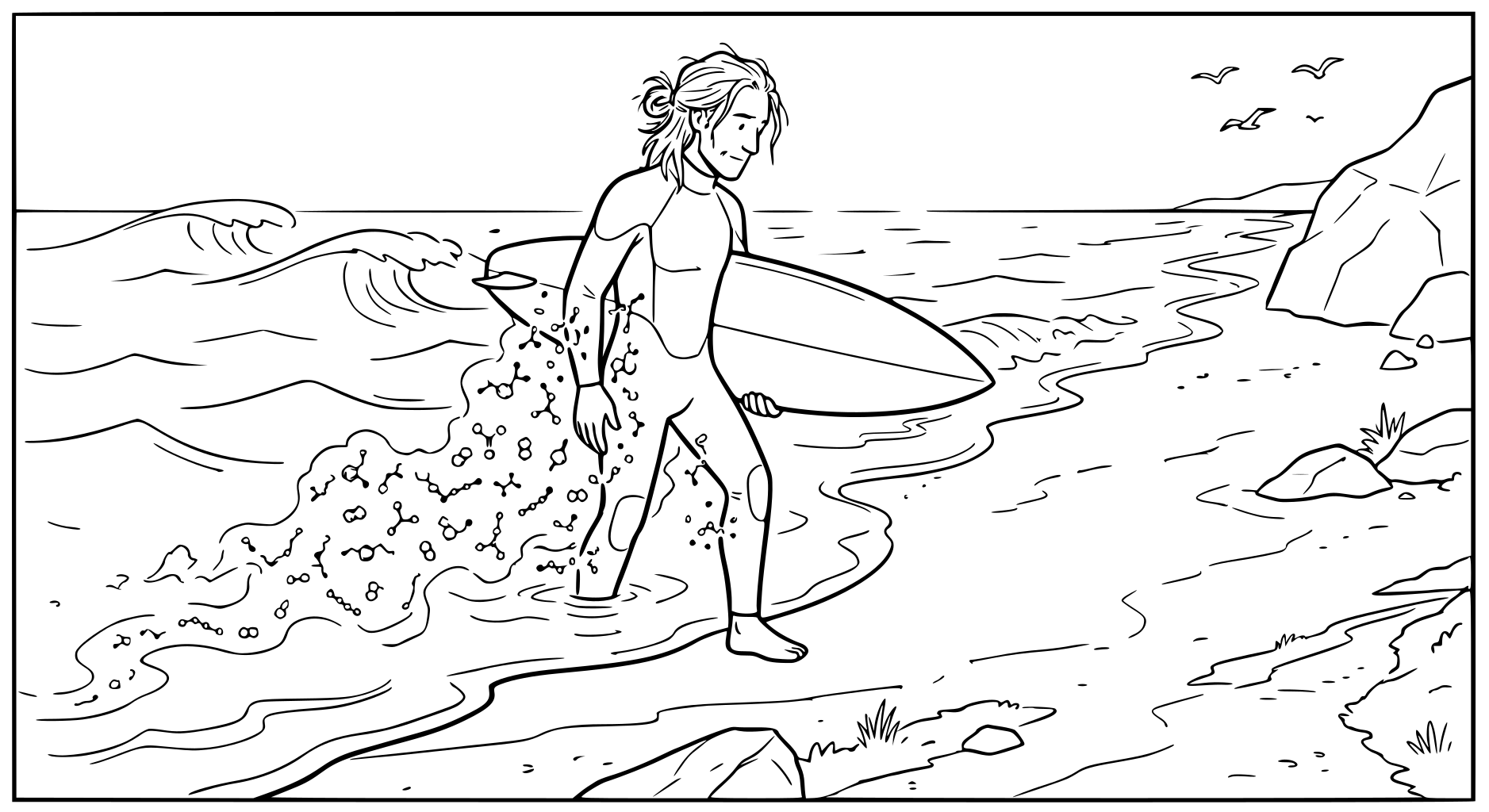
Slick, Dry, and Toxic
For Kai, the ocean was his go-to spot, his gym, and his therapist all rolled into one. He spent his mornings battling grey-green swells, convinced he was a pure child of the tides. To survive winter water that felt like liquid needles, Kai had invested in a high-tech wetsuit that the advert promised would "seamlessly integrate with the aquatic environment" and offer "unrivalled thermic-efficiency". It claimed to provide a 15% boost in paddle speed, though in reality, Kai still paddled with the grace of a runaway windmill. He loved how the water didn't just drip off the suit; it practically sprinted away, leaving the surface bone-dry.
What Kai didn't realise was that his pure connection to nature was actually sponsored by a heavy-duty coating of PFAS. These forever chemicals were the secret behind the gear's magic ability to repel the elements. While they kept him warm, they were also shedding into the lineup like invisible confetti. Every duck-dive was a lingering gift of lab-grown legacy to the reef.
Shedding on the Trail
The synthetic habit didn't stop at the shoreline. Even when Kai was just trekking coastal paths to scope out new breaks, his weather-proof layers, which the shop assistant swore were "essential for the modern explorer", were busy interacting with the environment. He loved that his jacket could withstand a torrential downpour, but he didn't realise that water-repellent was often just code for the same industrial chemistry found in takeaway bags and non-stick pans.
As he brushed against coastal reeds, microscopic traces of his synthetic shield were being left behind. These particles don't just stay on the fabric; they wear down into the sand. Because they are designed to be indestructible, they head straight into the local ecosystem. It was a perfect, tragic loop: the chemicals used to make his adventures high-performance were the same ones accumulating in the habitats he spent his life protecting.
The Chemistry of a Contradiction
While checking the surf, Kai spotted Elena, a marine biologist taking silt samples near a tidal pool.
"Looking for microplastics?" Kai asked, adjusting his professional grade raincoat hood.
"Actually, I'm hunting for the stuff you can't see," Elena replied, holding up a vial. "Forever chemicals. They're the ultimate uninvited guests. They don't break down. They travel through the currents and build up in the food chain—the bigger the predator, the bigger the chemical dose. By the time it hits the fish at the top of the chain, it's a concentrated cocktail of chemical defiance. Since wildlife can't break down these industrial bonds, the chemicals stay in their systems for years".
Kai looked at his gear, which had definitely not increased his performance as much as the glossy brochure suggested.
"It's the great outdoor irony," Elena said. "We buy gear designed to live forever just to spend a few hours in a fragile ecosystem, and the gear wins. It outlives the animals. But the tide is turning; there's a massive shift towards PFAS-free gear that protects you and leaves the environment exactly how you found it."
A Toxic Breakup
That evening, Kai staged a long-overdue intervention for his gear bag. He ditched the false promise of a 15% speed boost, realising he'd been sealing himself in a synthetic legacy that the ocean couldn't digest. By retiring his old, flaking waterproofs, he made a strategic strike that stopped the flow of chemicals directly into the waves where he surfed.
He switched those chemical layers for gear that played by nature's rules. He hunted for wetsuits made from natural rubber and coastal layers crafted from high-density weaves or waxed cotton—materials that rely on physical structure rather than a toxic spray to keep the water out.
Kai didn't need "seal-skin" tech to protect the wild; he just needed to stop the shedding. Kai learned that when a jacket stops beading water and begins to look soggy, it's a signal that the chemical squatters have already moved from the fabric into the ecosystem. By replacing worn-out synthetics with bio-based alternatives and finishes that vanish without a trace, he ensured his presence was just a visit, not a permanent trail. Kai still lives for the morning tides, but he's finally ditched the industrial garnish for something raw and real. For the first time, his go-to spot actually feels clean.
Zipping up a cotton hoodie, Kai wondered what other synthetic trails hid in his wardrobe. He realised every laundry cycle sent thousands of invisible fibres on a solo journey from his washing machine, through the pipes, and straight back to the sea.
This story is for educational and illustrative purposes only. It does not constitute professional advice.