TL;DR
Hao's Friday night takeaway habit comes with a side of industrial marinade he never actually ordered. From grease-resistant bags to plastic-wrapped cucumbers, he realises his convenience-first lifestyle is essentially seasoning his lunch with synthetic additives. By swapping melting plastic for actual glass, Hao finally chooses a life that doesn't taste like a chemistry set.
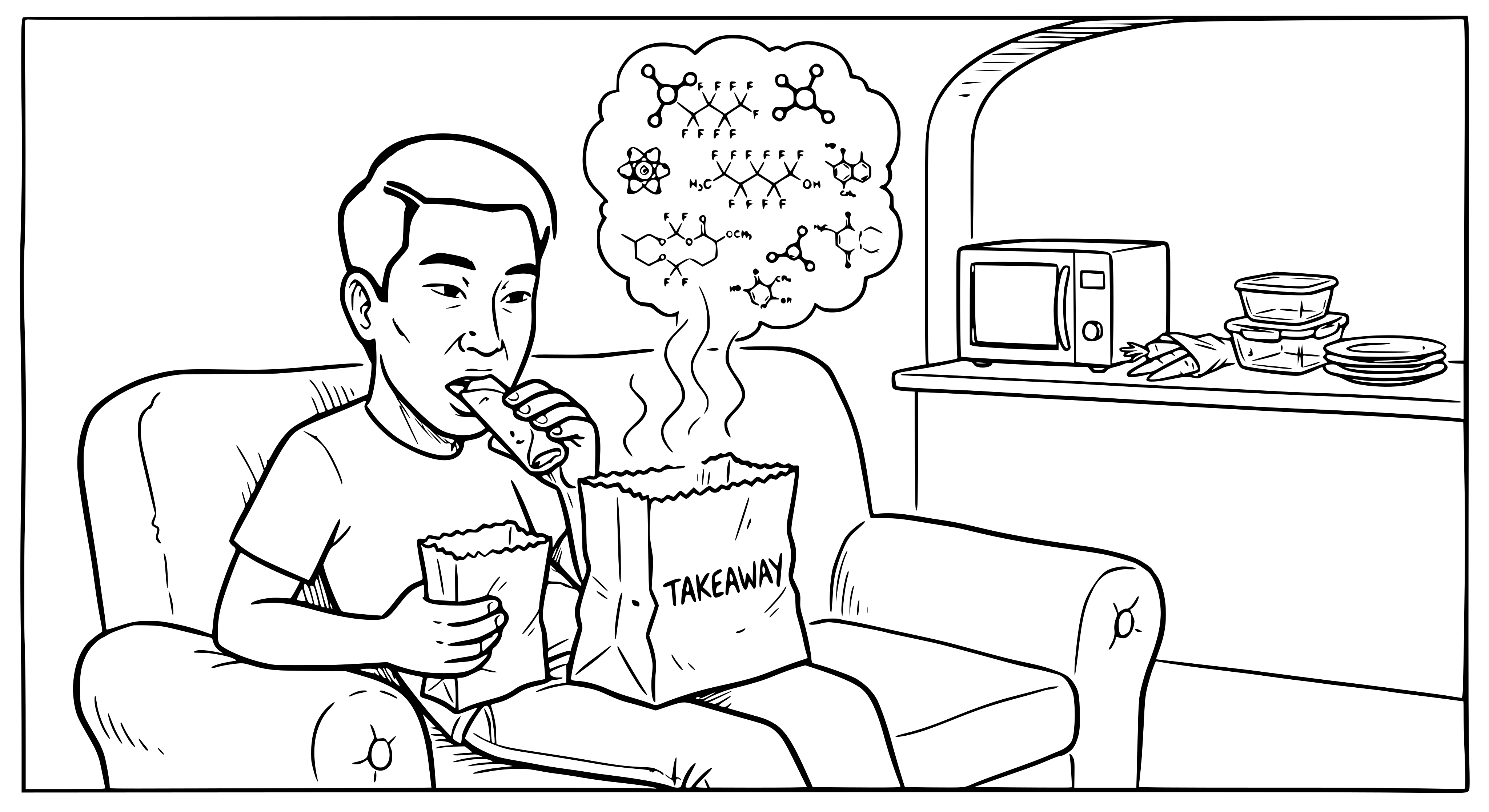
The Friday Ritual
The Friday night takeaway was a sacred tradition for Hao. After a week of back-to-back meetings and a fridge that contained little more than a withered lime and a jar of mustard, the rustle of a brown paper bag was the official sound of the weekend. He sat on his sofa, surrounded by a fortress of white cardboard boxes and clear plastic containers, ready to dive into a mountain of salt-and-pepper chips.
As he pulled a steaming spring roll from its greaseproof bag, he didn't notice that the paper didn't have a single oil spot on it. This was the silent magic of PFAS. Specifically designed to create a grease-resistant barrier. Without it, the oil from Hao's dinner would have soaked through the bag and onto his lap in seconds. Instead, the ingredients acted as a microscopic force field, keeping the grease inside the food and off the furniture.
The Secret Ingredient
Hao reached for the plastic-wrapped cucumber he'd bought for a healthy side. Just as he began peeling back the tight film, his phone screen lit up with a video short from his favourite self-improvement channel. A high-pitched voice-over chirped:
"And remember, superstars! That plastic wrapper isn't just a cover. It's an extra ingredient! While your veggies stay crisp, those hardworking molecules are busy 'leaching' directly into your food for a deep, industrial marinade. It's the secret to that long-lasting freshness that stays with you forever!"
Hao froze, the crinkle of the plastic sounding louder than before. He slowly pulled his hand away and slid the cucumber back into the bag. He'd once heard that plastic was just a wrapper, but in reality, it is a chemically active material. While the film kept the vegetable crisp, it was also prone to leaching—the invisible transfer of substances from the packaging directly into the food it touches.
When Hao decided to heat up his leftovers the next morning, he popped the clear plastic container straight into the microwave. As the plastic softened under the heat, the molecular bonds loosened, making it even easier for synthetic additives to move into his rice. He was essentially seasoning his lunch with a dash of industrial stability. To Hao, it was just convenience. To his body, it was a persistent influx of molecules that were never invited to the party.
Defying Decay
It wasn't just the takeaway. Hao's kitchen was a shrine to long-life engineering. From the plastic-lined interior of his cans to the stay-fresh bags of salad in the fridge, everything was designed to defy the natural laws of decay. These materials didn't just hold his food; they interacted with it. The very things that made his lifestyle possible. The ability to eat a meal prepared three days ago or keep bread soft for a week depended on a chemical infrastructure that the human body isn't quite equipped to process.
He looked at the clear plastic bottle of water on his coffee table. It had been sitting in the sun all afternoon. He took a swig, noticing a faint, plasticky tang. That taste wasn't just his imagination.
Real Food in Real Paper
Later that weekend, Hao met up with his friend Tia at a local farmer's market. She was carrying a reusable canvas bag filled with loose carrots and bread wrapped in simple brown paper that, unlike his takeaway bag, actually showed a few butter stains.
"I decided to stop buying the plastic-wrapped version of everything," Tia said, holding up a glass jar she'd filled with bulk-buy grains. "It's a bit more effort, but I'd rather have a few grease spots on my bag than a permanent chemical trail in my system."
Hao looked at his own shopping. A basket full of pre-portioned, plastic-heavy convenience. He realised that for every indestructible container, there was a simpler, more honest alternative. It didn't mean he had to live like a hermit; it just meant being the person who chooses the glass bottle over the plastic one, or the loose fruit over the sealed tray.
Small Changes, Big Wins
The future wasn't a story of toxic inevitability; it was an opportunity for a personal update. He didn't need to overcomplicate his life; he just needed to be a bit more intentional about what he invited into his home.
Hao realised he didn't need to stage a midnight coup against his kitchen cabinets, but even a small update to his routine could stop the madness. His first manoeuvre was evicting the plastic containers from the microwave. By swapping the melting plastic tub for a ceramic plate or a glass bowl, he effectively cut off the main road for synthetic additives trying to hitch a ride on his leftovers. He was officially retiring from the lifestyle of plastic-wrapped living and moving towards something more intentional. Mostly because he preferred his rice without an aftertaste of plastic engineering.
This story is for educational and illustrative purposes only. It does not constitute professional advice.